Disclosure: This page contains affiliate links. If you purchase through these links, Rental Home Automator may earn a commission at no additional cost to you. As an Amazon Associate I earn from qualifying purchases.
Tapo DL-110 Smart Wi-Fi Door Lock
The Tapo DL110 is a feature-packed smart lock with good build quality and an attractive price, but we do not recommend it for most Airbnb or short-term rental installations.
We originally expected the DL110 to be a Matter-compatible lock that could fit cleanly into a broader smart-home automation system. It isn’t.
The DL110 connects using Wi-Fi and Bluetooth. While it can integrate with platforms such as SmartThings and Google Home for basic lock control, our testing found that those integrations do not expose guest PIN-code management.
That is a major limitation for a short-term rental.
A smart lock at a rental needs to do more than lock and unlock remotely. It needs to support reliable, automated access-code management around guest reservations, cleaners, maintenance, and owner stays.
The Tapo DL110 is a capable consumer smart lock, but its architecture makes it a poor fit for the way we recommend automating rental access.
The Hardware Is Actually Pretty Good
Our first impression of the DL110 was positive.
The lock feels solid, the exterior design is clean, and it includes a lot of useful features for the price.
Access options include:
- Fingerprint recognition
- PIN-code entry
- Tapo app control
- Bluetooth
- Voice-assistant integration
- Physical backup keys
It also includes a built-in doorbell, rechargeable battery, activity logging, auto-locking, and temporary or scheduled passcodes.
TP-Link rates the exterior assembly IP65 for weather resistance and the lock carries a BHMA Grade 2 certification.
On hardware and features alone, the DL110 offers a lot of value.
The Problem Is Wi-Fi Architecture
The biggest issue for us is that the DL110 is a Wi-Fi smart lock.
For a primary residence, that may be perfectly acceptable.
For short-term rentals, we prefer locks that communicate through a dedicated smart-home network such as Z-Wave or Thread rather than connecting directly to the property’s guest Wi-Fi.
Guest Wi-Fi is frequently one of the least reliable parts of a rental property.
Passwords change. Routers get replaced. Guests unplug equipment. Internet service goes down.
A lock is too important to make unnecessarily dependent on that environment when better architectures are available.
The DL110 does support local Bluetooth access when Wi-Fi is unavailable, but that only helps someone who is physically near the lock. It does not solve the remote-management problem for a host managing the property from somewhere else.
Code Management Is the Dealbreaker
The larger problem appeared when we tested the lock with SmartThings and Google Home.
Basic lock control worked, but guest PIN-code management did not.
We could not create and manage door codes through those external platforms. Code administration remained inside the Tapo app.
For a homeowner, that may not matter.
For a short-term rental, it matters a lot.
Reservation-based lock automation depends on being able to create temporary guest codes, activate them around check-in, remove them after checkout, and coordinate access for cleaners, maintenance workers, and owners.
If the smart-home platform cannot manage those credentials, the lock becomes much less useful as part of an automated rental operation.
This is the main reason we do not recommend the DL110.
Battery and Backup Access Are Well Designed
The DL110 uses a large removable rechargeable battery that TP-Link rates for up to approximately one year of use under its test conditions.
We like the removable battery design because it can be recharged without removing the entire lock from the door.
There is also an emergency USB-C power connection if the main battery is depleted.
More importantly, the lock includes physical backup keys.
We consider a mechanical backup especially valuable at a short-term rental because it gives an owner or local property manager another way to recover from a dead battery, electronic malfunction, or other access problem.
Fingerprint Access Is Useful, But Not for Guests
The fingerprint reader worked as one of the DL110’s more interesting features.
For owners, cleaners, maintenance staff, or other recurring users, fingerprint access can be convenient.
We don’t consider it valuable for normal short-term rental guests.
Creating and removing fingerprints for every reservation would add unnecessary management work compared with simply assigning temporary PIN codes.
So while fingerprint access is a nice feature, it does not overcome the lock’s limitations around automated guest-code management.
How It Compares With the Yale Assure Lock 2
The difference between the Tapo DL110 and our preferred Yale Assure Lock 2 comes down less to features and more to architecture.
The Tapo offers more consumer features for the money, including fingerprint access and an integrated doorbell.
But the Yale fits much better into the type of rental automation system we want to build.
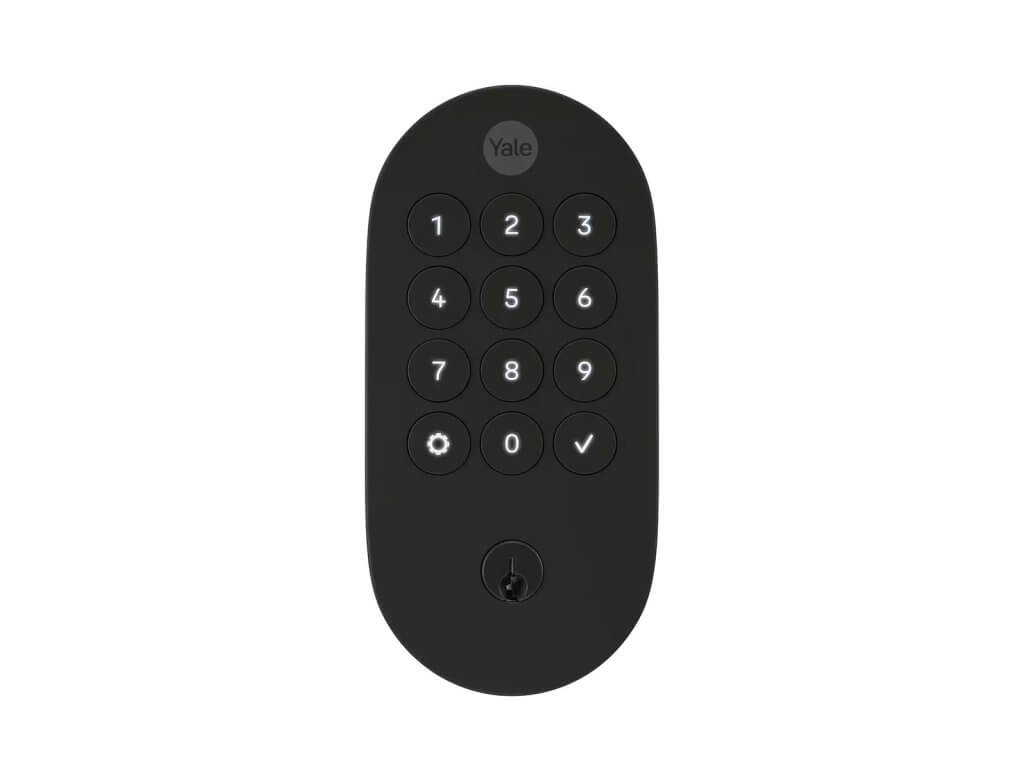
With the correct Yale connectivity module, the lock can operate through a dedicated smart-home protocol instead of depending directly on guest Wi-Fi, and access credentials can be managed through supported automation platforms.
For a rental property, we value that integration and reliability more than fingerprint readers or additional consumer features.
If we were installing a new lock specifically for an Airbnb or short-term rental, we would choose the Yale.
What We Don’t Like
The biggest issue is that the DL110 depends on Wi-Fi for remote smart-home connectivity.
More importantly, our testing found that third-party integrations such as SmartThings and Google Home do not expose guest PIN-code management.
That prevents the lock from participating fully in the reservation-based access automation we want at a short-term rental.
We also don’t see fingerprint access or the built-in doorbell as enough of an advantage to outweigh those limitations.
The DL110 is not a bad lock.
It is simply designed more like a consumer smart-home product than a rental automation device.
Tapo DL-110 Smart Wi-Fi Door Lock Review
The Tapo DL110 is a well-built, feature-rich smart lock at a competitive price. Its fingerprint reader, rechargeable battery, physical key backup, temporary passcodes, activity logging, and weather-resistant exterior make it an appealing consumer lock. But for Airbnb and short-term rental use, the underlying architecture matters more than the feature list. The DL110 uses Wi-Fi rather than Matter over Thread or Z-Wave, and in our testing its SmartThings and Google Home integrations did not provide the access-code management needed for automated guest stays. That is a dealbreaker for us. If you want a smart lock for your own home and are comfortable managing it through the Tapo app, the DL110 may be a very good value. If you are building an automated short-term rental, we recommend choosing a lock with stronger integration and credential-management support instead.
4/10
Total Score
-
Usability8/10PIN, fingerprint, physical key, and straightforward entry options
-
Automation Capabilities3/10Basic third-party lock control works, but guest-code management is not exposed in our testing
-
Suitability for STRs2/10Good consumer lock, but poor fit for automated reservation-based access
-
Reliability3/10Remote operation depends directly on Wi-Fi rather than a dedicated smart-home protocol
The Good
- Good build quality for the price
- Fingerprint, PIN, Bluetooth, app, and physical-key access
- Rechargeable removable battery
The Bad
- Uses Wi-Fi rather than Matter over Thread or Z-Wave
- Requires the Tapo app for full access management
- Poor fit for reservation-based lock automation
- Adds another critical device to the property's Wi-Fi network
About our reviews: We test and evaluate smart-home devices specifically for short-term rental use. Our goal is to help hosts choose equipment that is reliable, secure, and compatible with rental automation. Rental Home Automator is our software platform, so our recommendations also consider how devices fit into an automated rental setup.
Other Device Reviews