Disclosure: This page contains affiliate links. If you purchase through these links, Rental Home Automator may earn a commission at no additional cost to you. As an Amazon Associate I earn from qualifying purchases.
Google Nest Learning Thermostat (4th Gen)
The Google Nest Learning Thermostat (4th gen) is one of the most advanced and attractive smart thermostats available, but many of the features that make it compelling for homeowners provide less value at a short-term rental.
It offers excellent remote control through Google Home, broad HVAC compatibility, an included Nest Temperature Sensor, advanced energy-saving features, and premium hardware. If your property already uses Nest or requires HVAC capabilities that simpler thermostats don’t support, it can be an excellent choice.
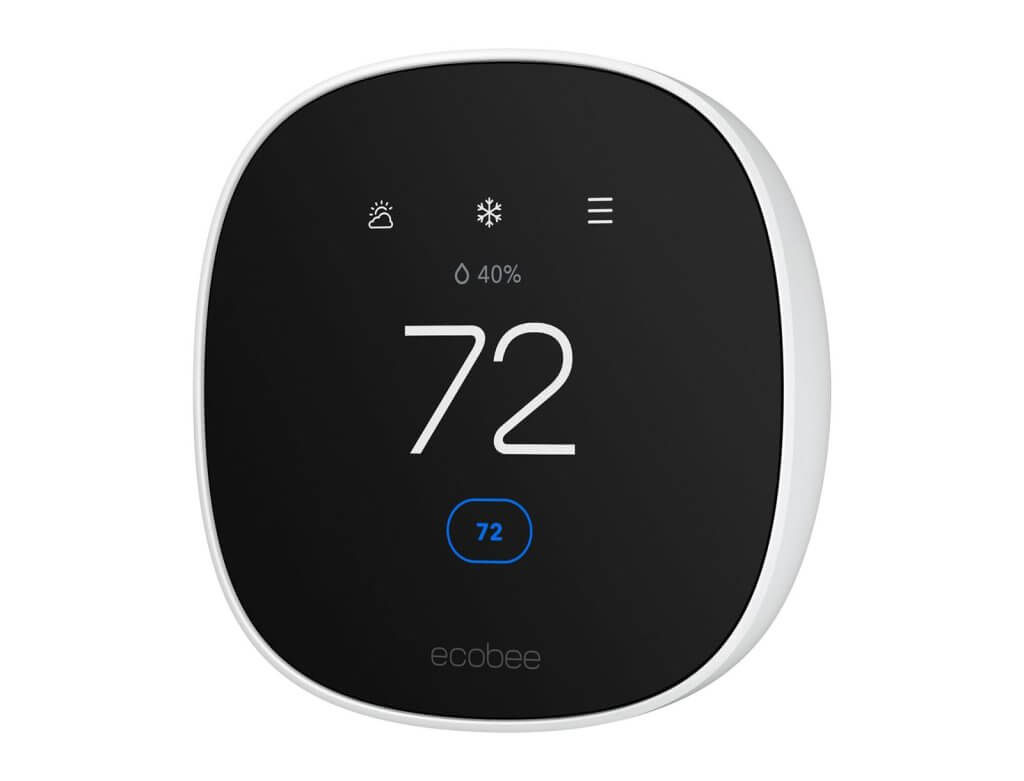
For most new Airbnb and short-term rental installations, however, we still prefer the ecobee Smart Thermostat Essential. Short-term rentals need predictable control around reservations more than they need a thermostat that learns household routines.
Excellent Hardware and Broad HVAC Compatibility
The Nest Learning Thermostat is Google’s premium thermostat, and the fourth-generation model is considerably more capable than the standard Nest Thermostat.
It works with most common 24-volt HVAC systems and supports more advanced equipment, including multi-stage heating and cooling, heat pumps, humidifiers, dehumidifiers, and ventilation systems.
That broader compatibility is one of the strongest reasons to consider it.
Google’s Power Sharing technology also means a C-wire is not required in most installations, although some systems may still require a C-wire or Nest Power Connector.
For properties with more complicated HVAC equipment, the Nest Learning Thermostat may therefore be a better fit than lower-cost smart thermostats.
Learning Features Are Less Useful in a Short-Term Rental
The defining feature of the Nest Learning Thermostat is its ability to learn how occupants use the property and automatically build a temperature schedule.
That makes sense in a primary residence where the same people follow relatively predictable routines.
Short-term rentals don’t work that way.
One guest may leave every morning at 8:00. The next may stay inside all day. A cleaner might arrive between reservations, followed by a maintenance technician and then another guest checking in that evening.
There is no stable household routine for the thermostat to learn.
Google allows hosts to control how Smart Schedule suggestions are applied, but we generally prefer to minimize learning-based behavior in rental properties and let the reservation calendar determine when the property should be occupied, vacant, or preparing for an arrival.
Nest Temperature Sensor Is a Useful Upgrade
The fourth-generation Nest Learning Thermostat includes a Nest Temperature Sensor.
This is genuinely useful at some short-term rentals.
A thermostat located in a hallway may not accurately represent the temperature in an upstairs bedroom, basement, or another part of the property. Additional sensors can help the HVAC system respond to temperatures in the areas guests actually occupy.
Google also allows multiple sensors to be used and averaged, and different sensors can be prioritized at different times.
For larger properties or homes with significant temperature differences between rooms, this is one of the stronger features of the Learning Thermostat.
Remote Management and Rental Automation
The Google Home app provides polished remote control over temperature, thermostat mode, schedules, and settings.
For basic remote property management, Nest works very well.
The challenge comes when you want the thermostat to become part of a larger short-term rental automation system.
A rental should behave differently before check-in, while guests are staying, after checkout, during vacancy, and during owner stays. We prefer the reservation calendar to control those changes instead of relying on a fixed weekly schedule or learned occupancy patterns.
The Nest Learning Thermostat can participate in broader automation systems, but Google’s ecosystem remains more restrictive than some competing thermostat platforms.
For the broader strategy, see our Thermostat Automation for Short-Term Rentals guide.
Premium Features Come at a Premium Price
The Nest Learning Thermostat is substantially more expensive than many smart thermostats.
You are paying for premium hardware, a larger display, sophisticated learning and energy-management features, broader HVAC compatibility, and an included temperature sensor.
Those features can absolutely justify the price in the right property.
But for a typical dedicated short-term rental with a relatively standard HVAC system, many of them don’t improve day-to-day rental operations enough to justify the additional cost.
That is why we generally recommend the lower-cost ecobee Smart Thermostat Essential for most new installations.
When the Nest Learning Thermostat Makes Sense
We think the Nest Learning Thermostat is a strong choice in several situations.
It makes sense if your property already uses the Google Home or Nest ecosystem, if you’re replacing an existing Nest thermostat, or if your HVAC system benefits from its broader equipment compatibility.
It can also make sense in higher-end rentals where the premium appearance and included temperature sensor add value.
And unlike the standard Nest Thermostat, the fourth-generation Learning Thermostat has enough additional functionality that we can justify paying more for it in the right installation.
We simply wouldn’t choose it by default for every short-term rental.
What We Don’t Like
Our biggest issue is that Nest’s signature learning behavior is designed around stable household routines rather than constantly changing rental occupancy.
The thermostat is also expensive compared with alternatives that provide the core features most hosts need.
Google Home remains central to setup and management, and we prefer platforms with greater flexibility when building advanced rental automations.
None of these limitations make it a poor thermostat. They simply reduce the value of some of its premium features in a dedicated short-term rental.
Google Nest Learning Thermostat Review
The Google Nest Learning Thermostat (4th gen) is an excellent premium smart thermostat, but it isn't our first recommendation for most new Airbnb or short-term rental installations. Its broad HVAC compatibility, excellent hardware, included temperature sensor, remote management, and mature Google ecosystem make it much more compelling than the standard Nest Thermostat. However, the Learning Thermostat's headline feature—learning household behavior—is fundamentally less useful in a property occupied by constantly changing guests. If you already use Nest, have a more complicated HVAC system, or simply prefer the Google ecosystem, the fourth-generation Learning Thermostat is a strong choice. If you're starting from scratch with a typical short-term rental, we would still choose the ecobee Smart Thermostat Essential for its simpler, more predictable approach to rental operations.
7/10
Total Score
-
Suitability for STRs6/10Excellent thermostat, but learning features provide less value with rotating guests
-
Cost6/10Premium price is difficult to justify for a typical rental
-
Reliability9/10Mature hardware and strong remote management
-
Usability8/10Premium physical controls and polished Google Home experience
The Good
- Excellent build quality and premium controls
- Broad HVAC compatibility
- Includes a Nest Temperature Sensor
- Usually works without a C-wire
The Bad
- Learning features are less useful with rotating guests
- Expensive compared with STR-focused alternatives
- Less flexible for advanced rental automation
About our reviews: We test and evaluate smart-home devices specifically for short-term rental use. Our goal is to help hosts choose equipment that is reliable, secure, and compatible with rental automation. Rental Home Automator is our software platform, so our recommendations also consider how devices fit into an automated rental setup.
Other Device Reviews