Smart home automation for Airbnb should be built around reservations and occupancy—not the daily routines of a homeowner. The most useful automations control guest access, HVAC, lighting, water protection, and property monitoring before check-in, during a stay, after checkout, and while the rental is vacant.
That is what makes Airbnb automation different from a typical smart home. A homeowner’s system follows habits. A short-term rental should follow the booking calendar.
If you want the broader strategy behind Airbnb smart device automation, start with our complete guide for hosts. This article focuses on one specific question: how should smart home automation actually work in an Airbnb?
TL;DR – The best Airbnb smart home automation setup connects the booking calendar to the physical property. Smart locks manage guest access, thermostats adjust around occupancy, lighting prepares the rental for arrival, water protection changes between guest stays and vacancy, and monitoring alerts the host when something needs attention.
The goal is not to automate everything. It is to automate the parts of the property that should behave differently depending on whether a guest is arriving, staying, checking out, or nobody is there.
A Typical Smart Home Is Built Around Daily Habits
Most smart home systems are designed for people who live in the same house every day.
That means the automation logic is usually built around predictable routines like:
- waking up at the same time
- leaving for work on weekdays
- returning home in the evening
- going to bed at a consistent hour
In a normal home, that makes sense.
A homeowner might set automations like:
- turn off lights at 11:00 PM
- lower the thermostat when everyone leaves
- unlock the door when a specific phone arrives
- use motion sensors to trigger routines
Those are reasonable automations for a primary residence.
But they are often a poor fit for a short-term rental, where the people inside the property are constantly changing and the schedule depends on bookings—not habits.
Short-Term Rentals Run on Reservations, Not Routines
This is the biggest difference that most hosts miss.
A smart home is usually designed around daily life.
An Airbnb needs to be designed around reservation flow.
That includes:
- guest arrivals
- guest departures
- same-day turnovers
- vacancy periods
- cleaner access
- maintenance visits
- seasonal occupancy patterns
In other words, your property should respond to stays, not to a fixed household schedule.
That’s why smart home automation for short-term rentals needs a very different setup than what most consumer smart home systems were originally built for. Rental properties need logic that can adapt to different people, different dates, and different occupancy states automatically.
What Should Airbnb Hosts Automate?
For most Airbnb hosts, the highest-value smart home automations are:
- Smart locks and guest access — Create and expire reservation-specific access automatically.
- Thermostat and HVAC — Pre-condition the property before arrival and reduce energy use during vacancies.
- Lighting — Prepare arrival lighting and manage exterior or vacancy lighting without interfering with guests.
- Water protection — Combine leak detection with smart water shutoff strategies appropriate for occupied and vacant periods.
- Property monitoring — Watch temperature, battery levels, connectivity, leaks, and other conditions remotely.
- Vacancy behavior — Return the property to a predictable protected state after checkout.
The most important rule is that these systems should respond to the reservation lifecycle, not operate as isolated timers.
For device recommendations, see our Best Smart Home Devices for Airbnb.
Why Smart Home Automation for Airbnb Often Fails with Standard Setups
A lot of hosts start with a normal smart home setup and assume they can “make it work” for their rental.
Sometimes they can—for a while.
But eventually, the cracks start to show.
1. Fixed schedules don’t match guest behavior
A guest doesn’t care that your lights normally turn off at 10:30 PM.
They may be arriving late, staying up longer, or returning from dinner after your automation has already shut everything down.
What works in a personal home often feels random or frustrating in a rental.
2. Geofencing usually doesn’t make sense
Geofencing is useful when the same people live in a property every day.
But in a short-term rental:
- the guests change constantly
- your phone is not a reliable trigger
- guest phones usually aren’t connected
- staff access may vary
That makes location-based logic far less useful than reservation-based automation.
3. Motion-based automations can create bad guest experiences
Motion sensors can be helpful in specific situations, but they can also cause problems when used too aggressively.
Examples:
- lights turning off while a guest is still in the room
- systems behaving differently at night
- automations that guests don’t understand
That’s not the kind of “smart” experience you want your guests to remember.
4. Devices can stay active when the property is vacant
One of the biggest hidden costs in short-term rentals is simply leaving things running when nobody is there.
That often includes:
- HVAC systems
- lights
- plug-in devices
- water-related risk without active protection
Without booking-aware automation, many hosts end up paying for waste—or worse, missing preventable problems between stays.
Why Airbnb Hosts Need Rental-Aware Automation Instead
The better approach is what we’d call rental-aware automation.
That means your devices behave based on what’s actually happening at the property—not just a generic smart home routine.
A better automation setup should know things like:
- Is a guest checking in today?
- Is the property currently occupied?
- Did a guest just check out?
- Is the rental vacant between reservations?
- Should this device be active right now?
This is exactly why Rental Home Automator is built specifically for hosts —to connect smart devices to booking calendars and automate your rental around real occupancy, not assumptions.
That difference is what separates a true short-term rental automation system from a basic smart home setup.
What Smart Home Automation for Airbnb Should Actually Do
A good Airbnb smart home system should recognize four operational states: pre-arrival, occupied, post-checkout, and vacant. Each state has different priorities, and the property should change automatically as the reservation moves from one stage to the next.
1. Before Check-In
Before a guest arrives, your property should automatically become guest-ready.
That can include:
- Program or activate the guest’s smart-lock code.
- Move the thermostat from vacancy settings to the guest comfort range.
- Turn on arrival or exterior lighting when appropriate.
- Return water systems to their occupied configuration.
- Confirm critical devices responded successfully.
2. During the Guest Stay
Once the property is occupied, automation should become more stable and predictable.
During this stage, the goal is not to be “clever.”
The goal is to be reliable.
That means:
- Keep HVAC focused on comfort rather than maximum savings.
- Avoid aggressive motion or lighting automations that surprise guests.
- Keep leak, temperature, battery, and offline monitoring active.
- Avoid changing critical systems unless the guest or property actually requires it.
3. After Checkout
Once a stay ends, the system should help the property transition back to vacancy mode.
That might include:
- Expire the guest’s access code.
- Return HVAC to vacancy settings.
- Reset lighting behavior.
- Begin the property’s water-protection strategy.
4. During Vacancy
This is one of the most important automation windows for a short-term rental.
When nobody is at the property, your system should focus on:
- Reduce unnecessary HVAC use.
- Increase monitoring sensitivity.
- Protect against leaks and water damage.
- Alert the host if critical devices go offline.
- Keep the property ready for cleaners, maintenance, or the next guest.
This is also where the right device choices matter. If you’re still building your setup, review the best smart home devices for Airbnb so you’re not automating around the wrong hardware.
For a deeper explanation of how reservation dates can control device behavior, see our calendar-based rental automation guide.
Why Device Selection Matters More in Rentals Than in Normal Homes
A homeowner can sometimes get away with devices that are merely “good enough.”
An Airbnb host usually can’t.
Why?
Because short-term rentals are more demanding:
- they’re often unattended
- guests use the property differently
- reliability matters more than novelty
- maintenance needs to be simple
That’s why the best smart home setup for a rental is usually based on dependable, rental-friendly devices rather than whatever is most popular on social media.
For example, hosts often need devices that are better suited for:
- guest turnover
- remote management
- easy battery replacement (when plug-in devices are not feasible)
- dependable connectivity
- low-maintenance operation
If you’re choosing a platform, compare the ecosystems carefully. SmartThings has historically been one of the strongest mainstream options for rental automation because of its broad device support, but platform capabilities, API access, lock-code support, and long-term costs can change. Our guide to smart home platforms explains the tradeoffs.
What Tools Do You Need for Airbnb Smart Home Automation?
Airbnb smart home automation usually requires more than individual smart devices. A reliable system has several layers:
- Smart-home platform or hub — Connects and controls locks, thermostats, switches, sensors, and other devices.
- Booking calendar or PMS data — Provides the reservation schedule that determines when occupancy changes.
- Rental automation layer — Converts reservations into device actions before check-in, at checkout, and during vacancies.
- Reliable devices — Smart locks, thermostats, water valves, lighting controls, and sensors designed for dependable remote operation.
- Monitoring and alerts — Tells the host when a device is offline, a battery is low, temperature is abnormal, or a critical automation fails.
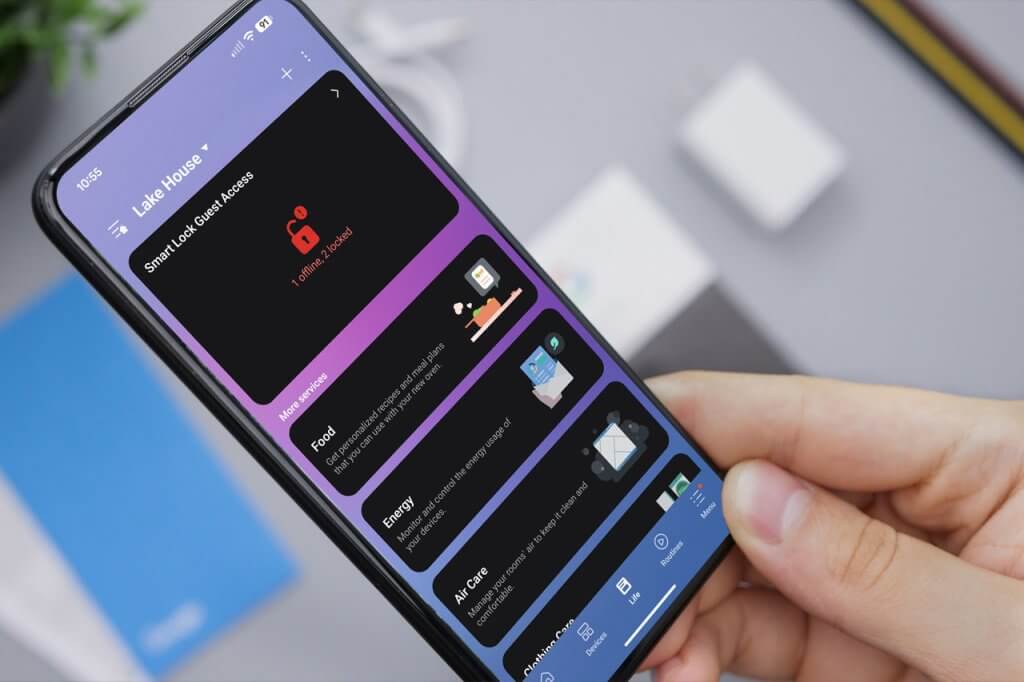
A consumer smart-home app can control devices remotely. An Airbnb automation system should connect those devices to the reservation itself.
For the broader technology stack, see our Complete Smart Home Setup for Airbnb & Short-Term Rentals.
What We Prioritize in Real Rental Automation
In a rental, reliability matters more than novelty.
We would rather use a simple automation that works predictably every stay than a clever automation that occasionally surprises a guest or fails while the property is unattended.
That is why we generally prioritize:
- reservation-based triggers over fixed schedules;
- predictable device behavior over “learning” features;
- reliable local protocols such as Z-Wave, Zigbee or Thread for critical devices when practical;
- safety margins for important actions such as programming guest access before arrival;
- retries and alerts when a device does not respond;
- different automation rules for occupied and vacant periods.
The goal is not to build the smartest-looking Airbnb. The goal is to make the rental operate reliably when the host is not there.
The Biggest Mistake Hosts Make: Automating a Rental Like They Live There
This is the core mistake behind most bad short-term rental automation.
Hosts often set up their property like this:
“What would I want in my house?”
But the better question is:
“What should happen at this property before, during, and after each reservation?”
That small mindset shift changes everything.
It changes:
- what devices you install
- what automations you create
- how you handle energy use
- how you prepare for guests
- how reliably your rental runs without you
And once you make that shift, your automations usually become:
- simpler
- more stable
- more useful
- easier to scale across properties
Frequently Asked Questions
What is the best smart home automation for Airbnb?
The best Airbnb smart home automation is built around reservations rather than household routines. It should coordinate guest access, HVAC, lighting, water protection, and monitoring based on check-in, occupancy, checkout, and vacancy.
What smart devices should Airbnb hosts automate first?
Most hosts should start with a smart lock and thermostat, then add leak detection, water protection, lighting, and monitoring. Access, energy use, and property protection usually deliver the most operational value first.
Can Airbnb smart home devices be automated from the booking calendar?
Yes. A rental automation platform can use booking-calendar or PMS data to trigger device actions before check-in, after checkout, and during vacancy periods instead of relying only on fixed schedules.
What tools are needed for Airbnb smart home automation?
A complete setup usually includes a smart-home platform or hub, compatible devices, booking-calendar data, a rental-aware automation layer, and monitoring or alerts for device failures and property conditions.
A Better Strategy for Airbnb Smart Home Automation
The best Airbnb automation strategy is usually not the most complicated one.
It’s the one that’s built around:
- reservations
- occupancy states
- guest comfort
- property protection
- consistency
That means avoiding gimmicky automations and focusing on the systems that actually reduce work.
If you want the full breakdown of how to build that kind of system, read our complete guide to Airbnb smart device automation. That guide walks through the devices, workflows, and automation structure that make the biggest difference for hosts.
A typical smart home setup is built for a homeowner’s life.
An Airbnb needs to be built for turnovers, bookings, vacancy, and guest stays.
The key is understanding that smart home automation for Airbnb must be built around bookings, not routines. That’s why the smartest short-term rental setups are not just “smart homes.” They’re rental-aware systems designed to automate the property around how it actually operates. For the broader framework behind this approach, see our complete guide to short-term rental automation.
When your automation matches your reservation flow, your rental becomes easier to manage, more efficient to run, and far more reliable over time.
Ready to Automate Your Rental the Right Way?
Use automation built specifically for short-term rentals—not just a typical smart home setup.