If you search for the best smart lock for Airbnb right now, you’ll find a lot of confident recommendations for Wi-Fi locks. Schlage Encode. August Wi-Fi. Yale with a Wi-Fi bridge. They’re easy to set up, they work with Airbnb natively, and they require no extra hardware. On paper, they’re the obvious choice — and for a host managing one property with modest booking volume, they work fine.
Here’s what those guides don’t tell you: Wi-Fi locks are optimized for convenience, not reliability at scale. For anyone running multiple units, managing remotely, or trying to automate codes based on a booking calendar, they create real operational problems. The best smart lock for an Airbnb with back-to-back bookings and remote management looks very different from what works in a residential home.
This guide covers every major smart lock protocol available in 2026, explains exactly where each one breaks down for short-term rental use, and tells you what actually holds up after hundreds of guest check-ins. If you want the short answer: Z-Wave is still the best choice for serious STR operators in 2026. The rest of this article explains why — and what you should know before buying anything.
For the full picture on automating your entire rental property, see our Ultimate Guide to Short-Term Rental Automation.
TL;DR
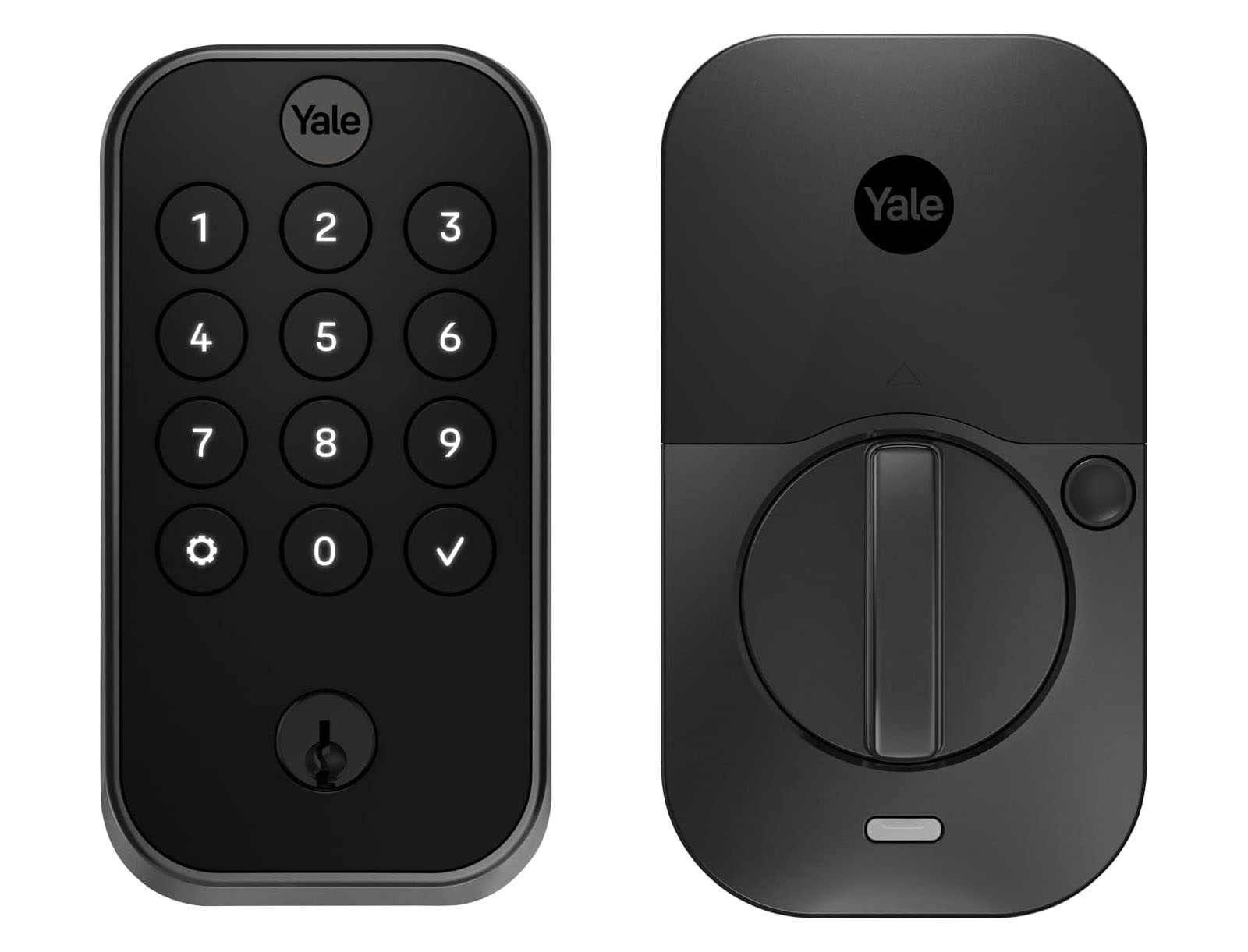
If you manage short-term rentals, or simply want a dependable system that just works, Z-Wave remains your safest and smartest choice right now. And our recommended smart lock for Airbnb is the Yale Assure 2 Lock with Z-Wave.
Best For:
- Airbnb Hosts
- Vacation Rentals
- Remote Property Managers
- Calendar-Based Automation
Why We Recommend It:
- 12–18 month battery life
- Reliable Z-Wave communication
- Supports advanced lock code automation
- Works with SmartThings
- Physical key backup available
What Makes a Smart Lock Good for Airbnb (It’s Not What You Think)
Most smart lock reviews evaluate locks the way a homeowner would: ease of setup, app quality, aesthetic design. For a short-term rental, the criteria are completely different. The best Airbnb smart lock isn’t necessarily the easiest one to install — it’s the one that holds up across hundreds of check-ins without requiring constant attention.
Here’s what actually matters when a lock is handling dozens of guest rotations per month:
Battery life under heavy use. A residential lock might get unlocked 5–10 times a day. An Airbnb lock at a busy property gets unlocked 20–30 times on turnover days. Battery drain accelerates accordingly. A Wi-Fi lock that claims 6-month battery life in normal use often delivers 3 months at an STR. A dead lock battery means a stranded guest, an emergency trip, and a likely 1-star review.
Code management at scale. Every guest needs a unique code. Every cleaner needs a code. Every maintenance visit needs a code. At one property you can manage this manually. At two or three properties it becomes a part-time job — unless your lock supports automated code scheduling tied to your booking calendar.
Reliability without babysitting. Locks connected to Wi-Fi depend on your router staying up, your internet staying connected, and your lock’s cloud service staying online. At a property you’re not physically present at, none of those are guaranteed. When something breaks at 11pm on a Friday, you find out via a guest message, not a system alert.
Protocol independence from guest network. Your guests are on your Wi-Fi. If a busy group of guests is streaming video and downloads are saturating the connection, a Wi-Fi lock on that same network can become unresponsive. This isn’t theoretical — it happens regularly at short-term rentals with high guest usage.
With those criteria in mind, here’s how every major lock protocol stacks up.
Every Smart Lock Protocol, Rated for Airbnb Use
Wi-Fi Smart Locks
Examples: Schlage Encode Plus, August Wi-Fi (4th Gen), Yale Assure 2 with Wi-Fi bridge
Wi-Fi locks connect directly to your home network and allow remote access without any additional hub. They’re the most commonly recommended locks in mainstream Airbnb guides because they’re simple to set up and integrate natively with the Airbnb platform.
What works:
- Native Airbnb integration — when a guest books, a code is automatically generated and sent through the app
- No hub required — works out of the box
- Strong app experiences with remote lock/unlock
- Broad platform support (Alexa, Google Home, Apple HomeKit)
What breaks down:
- Battery life is typically 3-6 months under STR use — you’ll be changing batteries 2-4 times per year per property
- Dependent on your internet connection — if the router reboots or the ISP goes down, remote access and code syncing stops
- Sits on the same network as guests — subject to bandwidth congestion and network security exposure
- Some manufacturers are now introducing subscription fees for full remote access features
- Code scheduling is limited — most platforms require manual setup per booking or native Airbnb integration only
Verdict: Wi-Fi locks are the right choice for hosts who want simple setup, manage a single property, and are comfortable with manual oversight. They’re not the right choice for multi-property operators or anyone building a fully automated system.
Z-Wave Smart Locks
Examples: Yale Assure Lock 2 (Z-Wave Plus), Schlage BE469 Z-Wave, Kwikset SmartCode 888
Z-Wave is a dedicated mesh radio frequency (908.42 MHz in North America) designed specifically for smart home devices. It runs completely independently of your Wi-Fi network. Locks communicate to a Z-Wave hub (like the Aeotec SmartThings Hub), which connects to the internet — but the lock itself never touches your guest network.
What works:
- Battery life of 12-18 months under STR use — dramatically better than Wi-Fi
- Operates independently of your guest Wi-Fi network
- Mature, proven ecosystem with 15+ years of real-world reliability data=
- Full programmatic access for automation — lock codes can be created, scheduled, and deleted via API
- No monthly fees for core functionality
What requires setup
- Requires a Z-Wave hub (one-time purchase, ~$100-130)
- Slightly steeper initial configuration compared to Wi-Fi locks
Verdict: Z-Wave is the best smart lock protocol for serious STR operators in 2026. The hub requirement is a one-time cost that pays for itself quickly in battery savings, reliability, and automation capability. For anyone running more than one property or wanting real automation — not just native Airbnb integration — Z-Wave is the clear answer.
Matter Over Thread Smart Locks
Examples: Yale Assure Lock 2 (Matter module), Lockly Secure Pro (Matter)
Matter is the new universal smart home standard backed by Apple, Google, Amazon, and Samsung. Thread is a low-power mesh protocol that Matter uses for battery-powered devices like locks — conceptually similar to Z-Wave in its network architecture.
On paper, Matter over Thread should be the future: one standard, every platform, full interoperability.
The current reality (as of early 2026):
Every major platform still has incomplete Matter lock support:
- SmartThings: Lock-code APIs remain in “proposed” status. Code scheduling and status webhooks don’t function reliably.
- Google Home: No official developer support for lock-code automation.
- Amazon Alexa: Can control Matter locks but lacks the programmatic hooks needed for automated code management.
- Apple HomeKit: Works locally but doesn’t expose programmatic access to lock-code changes.
The hardware exists. The platform support for actually automating those locks — creating codes, scheduling them, deleting them, getting confirmation they were set — does not. Until the APIs open up, Matter locks can be paired but not properly automated. For a detailed breakdown of where each platform stands, Samsung’s SmartThings developer documentation shows the current API status.
Verdict: Matter over Thread has enormous long-term potential, and we’re watching it closely. But in 2026, it’s not ready for STR automation. If you buy a Yale Assure Lock 2 with a Z-Wave module now, Yale is likely to release a Matter upgrade module — making it a safe long-term investment without betting on unfinished platform support today.
Zigbee Smart Locks
Zigbee is another mesh radio protocol, similar in concept to Z-Wave. It had decent adoption a few years ago but the major lock manufacturers have largely abandoned it.
The problem: Limited availability of Zigbee locks, weaker battery performance than Z-Wave, and no clear future as the industry moves to Matter. For sensors and bulbs, Zigbee is still a reasonable choice. For door locks, it’s a dead end.
Verdict: Don’t buy Zigbee locks in 2026.
Bluetooth Smart Locks
Bluetooth locks work without Wi-Fi or hubs, which sounds appealing until you realize what that means in practice: no remote access, no automation, and a range of about 30 feet. You have to be physically near the lock to manage it.
For a vacation rental where you may be miles — or states — away from the property, Bluetooth locks are essentially useless.
Verdict: Not suitable for short-term rentals.
Protocol Comparison at a Glance
The table below summarizes how each protocol performs against the criteria that matter specifically for Airbnb smart lock use:
| Protocol | Battery Life | Remote Access | Automation | Hub Required | STR Suitability |
|---|---|---|---|---|---|
| Wi-Fi | 3–6 months | ✅ Yes | Limited | No | ⚠️ Acceptable for single property |
| Z-Wave | 12–18 months | ✅ Yes | Full | Yes (~$100) | ✅ Best for STR |
| Matter/ Thread | 12–18 months | ✅ Yes | ❌ Not yet | Depends | ⛔ Not ready |
| Zigbee | 6–12 months | With hub | With hub | Yes | ⛔ Avoid |
| Bluetooth | Varies | ❌ No | ❌ No | No | ⛔ Not suitable |
The Problem No Lock Solves On Its Own
Here’s something the buying guides miss: even the best lock with the best protocol doesn’t automatically solve your code management problem.
The lock handles the physical access. It doesn’t know your booking calendar. It doesn’t know when guests check in, when they check out, when there’s a same-day turnover, or when your cleaner needs access for 3 hours between stays. Someone — or something — has to bridge that gap.
For hosts managing this manually, it means logging into a platform before every check-in, creating a code, sending it to the guest, remembering to delete it after checkout, and creating a separate code for the cleaner. At one property, this takes maybe 10-15 minutes per booking. At three properties with back-to-back stays, it becomes the job.
This is the problem that Rental Home Automator was built to solve. RHA connects your booking calendar directly to your Z-Wave locks. When a guest books, a unique code is automatically created and scheduled for their exact check-in and checkout time. When they leave, the code is deleted. Cleaner codes, maintenance codes, and master codes all work the same way — set the rules once, and the system handles every booking automatically.
If you want to understand how the code management works in detail, the External Lock Codes feature page covers it fully. For multi-property operators, Master Door Codes lets you manage access across all your units from one place.
Our Recommendation: Yale Assure Lock 2 (Z-Wave Plus)
After testing locks across multiple properties and protocols, the Yale Assure Lock 2 with Z-Wave Plus is the lock we recommend for the majority of short-term rental operators.
Here’s why it holds up specifically in STR conditions:
Battery life. In real STR use — multiple unlocks per day, code changes between guests — the Yale Assure 2 consistently delivers 12+ months. Wi-Fi alternatives need changing 2-4x per year at the same usage level.
Code capacity. Supports up to 250 unique access codes, enough for the most heavily booked properties.
Build quality. These things are premium quality and a level above any other smart locks on the market from reputable brands.
Platform support. Works with SmartThings, Hubitat, Home Assistant, and any Z-Wave controller. If your platform changes, the lock doesn’t.
Future-proofing. Yale is expected to release a Matter upgrade module for the Assure 2, making it a viable path to Matter when the ecosystem is actually ready — without needing to replace the lock hardware.
For a deeper look at why we chose this lock above all alternatives, see our full article on why the Yale Assure Lock 2 is the best smart lock for short-term rentals.
A Note on the eufy Smart Lock C34
The eufy C34 is worth mentioning as a notable Wi-Fi option. It runs on eight AA batteries instead of the typical four, which doubles available power and extends battery life significantly compared to other Wi-Fi locks. It also supports Matter over Thread alongside Wi-Fi, positioning it as a potential bridge between today’s and tomorrow’s standards.
It’s not the right choice for a fully automated multi-property setup right now — the same Matter API limitations apply. But for a single-property host who wants Wi-Fi simplicity and better-than-average battery life, it’s the most thoughtfully engineered Wi-Fi lock we’ve tested.
How to Think About the Lock + Automation Stack Together
The lock decision and the automation decision are related but separate. Here’s how to think about them together:
Lock choice → determines what automation is possible. Z-Wave locks give you full programmatic access to code management. Wi-Fi locks are easier to set up and can give you native Airbnb integration (create/delete codes when bookings happen on Airbnb) but limited flexibility for anything else — VRBO bookings, direct bookings, cleaner schedules, maintenance visits.
Automation layer → determines how much manual work you do. Native Airbnb integration handles guest codes on Airbnb only. A calendar-connected automation platform handles all booking sources, all access types, and all properties from one place.
If you want to understand how these two layers work together in practice, our article on lock automation for short-term rentals covers the full workflow. And our guide on SmartThings lock limitations explains specifically what SmartThings can and can’t do for lock code management — which is relevant context if you’re considering that platform.
For a full breakdown of every protocol and its place in a smart home system — not just locks — see our best smart home automation protocol guide.
Frequently Asked Questions
For most hosts, the Yale Assure Lock 2 with Z-Wave Plus is the best choice. It delivers 12+ months of battery life under STR use, supports up to 250 access codes, and works with every major Z-Wave automation platform. Wi-Fi locks like the Schlage Encode Plus work well for single-property hosts who want simpler setup and native Airbnb integration, but Z-Wave outperforms them on reliability and automation capability at scale.
Yes. Z-Wave locks require a Z-Wave hub to connect to the internet and to an automation platform. The Aeotec SmartThings Hub (Gen 3) is the most widely compatible option and costs around $100-150. This is a one-time cost — the same hub works for all your Z-Wave devices across every property on the same SmartThings account.
It depends heavily on the protocol. Z-Wave locks typically last 12-18 months at an STR. Wi-Fi locks typically last 3-6 months because the radio constantly maintains a Wi-Fi connection. At a property with 15-20 bookings per month, battery replacement frequency matters — factor it into the total cost of ownership.
Eventually, yes — but not yet. As of early 2026, none of the major platforms (SmartThings, Google Home, Apple HomeKit, Amazon Alexa) have fully functional lock-code APIs for Matter locks. The hardware exists but the automation layer doesn’t. Z-Wave remains the only protocol with mature, complete automation support for short-term rental use.
There are two approaches. The first is native Airbnb integration — available on Wi-Fi locks like Yale and Schlage, this automatically creates a code when a guest books on Airbnb and deletes it after checkout. The limitation is it only works for Airbnb bookings. The second approach is a calendar-connected automation platform like Rental Home Automator, which syncs codes across all booking sources (Airbnb, VRBO, direct bookings) and handles cleaners, maintenance visits, and custom schedules — all automatically.
Stop Managing Lock Codes Manually
You’ve chosen the best smart lock for your Airbnb. Now the question is whether you’re spending 10 minutes per booking managing codes manually — or zero.
Rental Home Automator connects directly to your booking calendar and your Z-Wave locks. Every guest gets a unique code automatically created at check-in time and deleted at checkout. Cleaner codes, maintenance codes, and permanent master codes all managed from one dashboard — across every property you own.
No more logging into platforms before each check-in. No more worrying about old codes still being active. No more manual work between stays.
Last updated April 2026. Protocol support status (especially Matter) changes frequently — check our smart home platforms guide for the most current information.