
TL;DR: Aqara makes some of the best-looking and most affordable smart-home devices on the market. But for serious automation — especially short-term-rental management — the ecosystem remains too closed, too dependent on its own hub, and too risky from a security and interoperability standpoint.
You’re setting up SmartThings at your short-term rental. The goal is simple: automate lock codes, control the thermostat between stays, and get alerts when something goes wrong. Aqara keeps coming up in your research — affordable, well-reviewed, and apparently compatible with everything.
So you dig in. And that’s where the problems start.
This Aqara smart home review looks specifically at whether Aqara devices and the Aqara ecosystem hold up for short-term rental and vacation rental use. Our verdict: the hardware is genuinely impressive. The ecosystem, for STR hosting purposes, is not the right fit — and this article explains exactly why.
What Is Aqara?
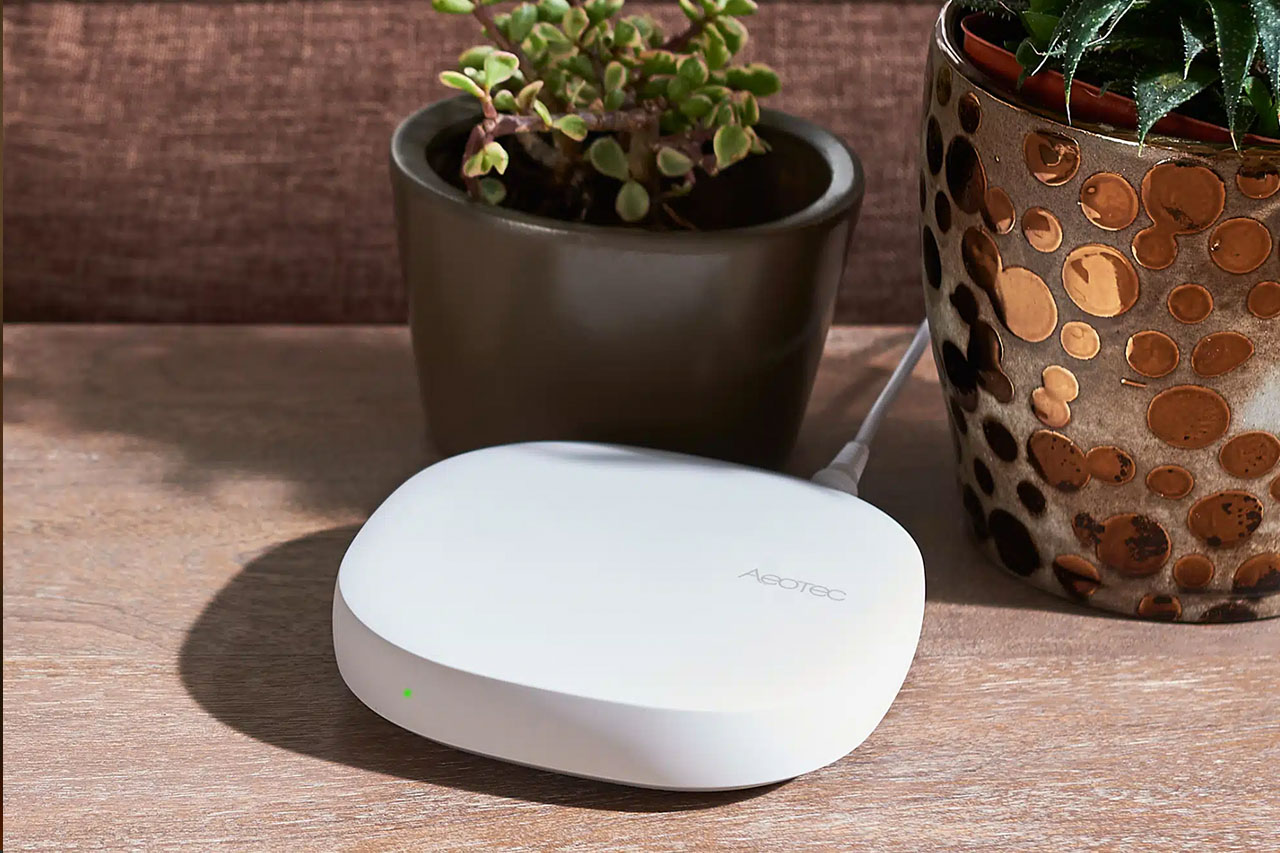
Aqara is a smart home brand that has grown rapidly by offering well-designed, affordable devices across a wide range of categories: smart locks, leak sensors, thermostats, switches, cameras, and more. Their newest hub, the Hub M3, is marketed as a future-proof centerpiece — a Matter controller, Thread border router, Zigbee coordinator, Wi-Fi bridge, Bluetooth hub, and IR blaster in a single device.
On paper, that’s compelling. In practice — particularly for short-term rental automation — the picture is more complicated.
The Core Problem: You’re Locked Into Their Ecosystem
Almost every Aqara device requires one of their branded hubs to function. Even newer Matter-enabled products — like the Aqara U200 smart lock and T1 sensors — depend on the Aqara hub for full features and firmware updates.
That means you’re effectively locked into Aqara’s ecosystem from day one. If their cloud goes down, your automations may fail. Mixing Aqara with other brands reveals that interoperability covers only the basics — on/off, lock/unlock — while advanced functions like PIN code management and automation triggers stay behind the Aqara app’s walls.
For STR hosts, that’s the first deal-breaker. Short-term rental automation requires devices and platforms that interoperate cleanly with booking calendars and hub systems. An ecosystem that routes everything through its own cloud — with no open API for code management — can’t support the kind of calendar-driven automation that actually makes rental management hands-off. See our ultimate guide to short-term rental automation for what that actually requires.
Interoperability: Worse Than Advertised
Aqara advertises support for every major platform — Apple Home, Google Home, Amazon Alexa, SmartThings — but real-world testing shows that support is partial at best.
| Platform | What Works | What Doesn’t |
|---|---|---|
| Apple Home | Basic control, Home Key, automations | API access, enterprise integration |
| Google Home | Lock/unlock, status, some Matter support | Code management, developer API |
| Amazon Alexa | Voice control | No PIN or automation APIs |
| SmartThings | Z-Wave/Zigbee device support only | Matter locks limited to basic functions |
Even though the Hub M3 promises “advanced Matter bridging,” Aqara themselves note that some device types may not be supported. For developers or integrators, that means you’re on your own.
Until all major ecosystems implement full Matter support for lock credentials, Aqara locks remain consumer-only devices — not suitable for automated code provisioning or multi-property management. That distinction matters enormously for STR hosts. The ability to create and delete guest-specific lock codes automatically, tied to booking windows, is the central requirement. Aqara doesn’t support it. For a deeper look at why protocol choice matters, see what is the best smart home automation protocol for STRs.
Cloud Reliance and the Security Question
Aqara devices can process some automations locally, but most still rely on cloud communication with Aqara’s servers — operated by Lumi United Technology Co. Ltd., based in China. This raises two issues that matter for STR hosts specifically.
Security surface. Every hub is a potential gateway to your local network. If compromised, it could allow access to other devices on the same LAN. Aqara’s hub maintains constant outbound connections to remote servers — which means your smart home is never fully within your own network boundary.
Data residency. Aqara claims GDPR compliance, end-to-end encryption, and ISO 27001 certification. But device telemetry, user IDs, and activity logs still flow through their cloud. For a homeowner, that’s an acceptable trade-off. For a host managing lock codes and guest access credentials across multiple properties, it’s a more significant concern.
Some technically-minded hosts have tried isolating Aqara hubs on a VLAN to block internet access. Reports are mixed: certain local automations continue working, but notifications and cloud-triggered routines stop. Aqara is not designed for offline or LAN-only operation. This matters because network reliability at STR properties is often imperfect — and you need devices that degrade gracefully, not ones that simply stop working when cloud connectivity drops.
No Developer API for Guest Code Automation
This is the issue that disqualifies Aqara most definitively for STR use. Unlike Z-Wave lock manufacturers with open platform support, Aqara’s API does not expose endpoints for access code management. There’s no documented way to create, update, or delete guest codes from an external system.
Aqara offers private partner integrations for large OEMs, but not for third-party automation platforms. That means you cannot programmatically issue time-bound lock codes based on booking dates, and you cannot retrieve lock events for guest auditing.
For a short-term rental that needs a unique code created and deleted automatically for every booking — which is the whole point — that’s a non-starter. This is precisely why we recommend Z-Wave locks for STR automation over Wi-Fi and Matter-dependent alternatives like Aqara.
What Aqara Gets Right
It’s worth being specific about where Aqara actually delivers, because the hardware itself is genuinely good.
The U200 lock combines Thread, Home Key, and fingerprint access for under $200 — impressive by any measure. Their sensor lineup is affordable and well-built. The Hub M3’s multi-protocol support is technically ambitious and, for homeowners who live in their properties, probably the right kind of future-proofing.
The problem isn’t the hardware. It’s that the value proposition for STR hosting ends the moment you need calendar-driven code management, open API access, or a platform that doesn’t route everything through a Chinese cloud server. At that point, the “affordable” ecosystem becomes an expensive dead end.
The Bottom Line: Aqara for STR Hosting
Aqara is a strong consumer smart home ecosystem. For short-term rental automation specifically, it falls short on the three requirements that matter most: open API for code management, reliable offline operation, and genuine third-party interoperability.
If you’re building an STR automation stack and wondering whether Aqara fits, the honest answer is: not for locks, not for anything requiring booking-calendar integration, and not if you’re using SmartThings as your hub platform. For a comparison of ecosystems that do work well for STR hosting, see our review of Eve Systems and IKEA’s Matter-over-Thread sensor lineup — both of which take a different approach to openness and local control.
Aqara is fine for hobbyists. It’s not the right choice for hosts.
Frequently Asked Questions: Aqara for Short-Term Rentals
Is Aqara compatible with SmartThings? Partially. Aqara’s Z-Wave and Zigbee devices can pair with SmartThings, but Aqara’s Matter-based locks — including the U200 and U300 — are limited to basic functions through SmartThings. Full PIN code management and automation triggers are not supported outside the Aqara ecosystem.
Can Aqara locks be automated for Airbnb guest codes? No. Aqara does not expose a developer API for access code management. That means there’s no way to programmatically create or delete guest codes tied to booking windows from an external platform. This is the critical limitation for STR use.
Does Aqara work offline? Partially. The Aqara Hub M3 supports some local processing, but notifications and cloud-triggered automations stop working without internet connectivity. Aqara is not designed for full offline or LAN-only operation.
Is Aqara secure enough for a rental property? Aqara claims GDPR compliance and ISO 27001 certification. However, device telemetry flows through servers operated by Lumi United Technology in China. For hosts managing guest access credentials across multiple properties, that data residency consideration is worth weighing carefully.
What should I use instead of Aqara for STR automation? For locks specifically, Z-Wave locks paired with a SmartThings hub are the proven STR-compatible choice. For sensors and plugs, Eve Systems (Thread/Matter, fully local, European privacy standards) and IKEA’s Matter-over-Thread sensors are strong alternatives. The full setup is covered in our guide to using SmartThings to automate your short-term rental.
What to Use Instead: Building a Platform That Actually Works for STRs
The right smart home platform for a short-term rental isn’t necessarily the most feature-rich one — it’s the one that integrates with your booking calendar, supports open API access for lock codes, and operates reliably whether or not its vendor’s cloud is having a good day.
If you’re evaluating platforms, our guide to using SmartThings to automate your short-term rental walks through the full working setup — devices, hub, calendar integration, and automation logic. And if you want to see how Rental Home Automator ties the booking calendar to all of it automatically, that’s exactly what the platform does.
)
&description=&image=https://www.rentalhomeautomator.com/wp-content/uploads/hosting_rentalhomeautomator_com_files/2025/11/aqara-smart-home-review-1024x682.jpg)