TL;DR: Eve Systems, a German smart-home manufacturer, has quietly built one of the most forward-thinking ecosystems in the industry. Every Eve product is built on Thread and Matter, designed for local control, and backed by European privacy standards. The only real downside? The price. But for property managers and serious home-automation users, Eve is one of the most future-proof investments you can make.
Eve Systems makes some of our favorite smart-home devices for short-term rentals. After extensive testing of the Eve Energy Smart Plug, Eve Energy Outlet, and Eve Light Switch, we’ve been impressed by the company’s build quality, reliable Matter-over-Thread connectivity, and excellent integration with SmartThings.
In fact, the Eve Energy is currently our favorite smart plug, and its exceptional performance is what encouraged us to test more products from the Eve family.
But Eve isn’t necessarily our first choice in every device category.
Its hardware costs more than many competing products, the Light Switch’s touch-sensitive interface isn’t ideal for rental guests, and less expensive devices from IKEA and ThirdReality have performed extremely well in our testing.
Our verdict: Eve is our premium recommendation for smart plugs and outlets, and a strong choice for in-wall switches. However, we’d selectively buy its best products rather than build an entire rental property around one manufacturer.
Here’s what we’ve learned about Eve Systems, where its devices make sense for Airbnb properties, and when we’d choose a less expensive alternative.
Why We Like Eve Systems
Short-term rentals place unusual demands on smart-home equipment.
Guests expect lighting and electrical devices to work normally, while property managers need reliable remote operation. A device that disconnects, fails to respond, or requires repeated troubleshooting can quickly become more expensive than its purchase price.
We evaluate devices based on those operational concerns rather than simply counting features.
Eve’s biggest strengths are its premium construction, local-first device architecture, and support for open smart-home standards.
Many of its newer products use Matter over Thread, allowing them to connect to compatible smart-home platforms without relying on an Eve-specific cloud account.
That makes Eve particularly attractive for rental properties where we want dependable device control without adding unnecessary Wi-Fi connections and manufacturer integrations.
Eve isn’t the only company pursuing this approach, but its hardware has consistently impressed us.
Our Hands-On Testing With Eve Devices
Our recommendation is based primarily on three products we’ve personally installed and tested with SmartThings:
The Eve Energy Smart Plug has been the standout.
After roughly a year of use in rental environments, our plugs have been essentially flawless. Pairing has been straightforward, response times have been excellent, and we haven’t experienced the unexplained disconnections or ongoing maintenance problems encountered with some cheaper alternatives.
Our experience with the Eve Energy Outlet has also been excellent, particularly for installations requiring permanent smart power control.
The Eve Light Switch has performed reliably, although its physical interface is less guest-friendly than we’d prefer.
These experiences give us confidence in Eve’s plugs, outlets, and switches. They don’t automatically establish that every Eve device performs equally well, and we wouldn’t make that claim without testing the individual products.
Eve Devices We’ve Tested and Recommend
Eve Energy Smart Plug — Our Favorite Smart Plug
Verdict: Highly Recommended | Our #1 Smart Plug
The Eve Energy is the best smart plug we’ve tested for short-term rentals.
After approximately a year of use, our experience has been excellent. It pairs easily with SmartThings, responds quickly, supports energy monitoring, and has remained reliably connected without requiring repeated troubleshooting.
The physical construction also feels more substantial than competing products we’ve tested from IKEA, ThirdReality, and other manufacturers.
As a permanently powered Thread device, it can help strengthen the Thread network for nearby compatible sensors and devices.
Its main disadvantages are price and the fact that guests can unplug or relocate it. For noncritical equipment such as lamps, landscape lighting transformers, and suitable decorative lighting, however, it’s our preferred solution.

Eve Energy Outlet — Our Preferred Permanent Smart Outlet
Verdict: Highly Recommended
The Eve Energy Outlet offers much of what we love about the smart plug in a permanently installed electrical receptacle.
Both outlets can be switched independently, giving us two controllable connections in one location. Energy monitoring is also available, although power consumption is reported as a combined value for both receptacles.
We’ve installed Eve Energy Outlets where removable smart plugs weren’t appropriate, including selected outdoor-lighting and heat-tape applications, with excellent results.
The biggest drawbacks are practical: installation can be difficult in crowded electrical boxes, and the small manual buttons aren’t particularly intuitive for guests.
Still, for permanent smart power control, this is one of our favorite options.

Eve Light Switch — Excellent Hardware, Less-Ideal Guest Controls
Verdict: Recommended, With Reservations
The Eve Light Switch has impressed us with its build quality, reliable SmartThings connectivity, quick response, and Matter-over-Thread support.
It’s a permanently powered Thread device, so it can also help strengthen the network.
However, we have one significant criticism: the entire face is touch-sensitive rather than a conventional mechanical paddle.
That works once you’re familiar with it, but guests may accidentally activate the switch or be unsure how to operate it.
For short-term rentals, we strongly prefer controls that behave exactly as guests expect. A familiar tactile switch may be the better choice in high-use areas.
Installation also requires compatible wiring and enough space in the electrical box.

Other Eve Products Worth Considering
Eve’s broader catalog includes devices such as Eve Door & Window, Eve Motion, Eve Water Guard, and other monitoring and control products.
These may be useful for contact monitoring, motion-triggered lighting, leak detection, and environmental monitoring at a rental property.
However, our strongest recommendations are for the three products we’ve tested and reviewed in detail.
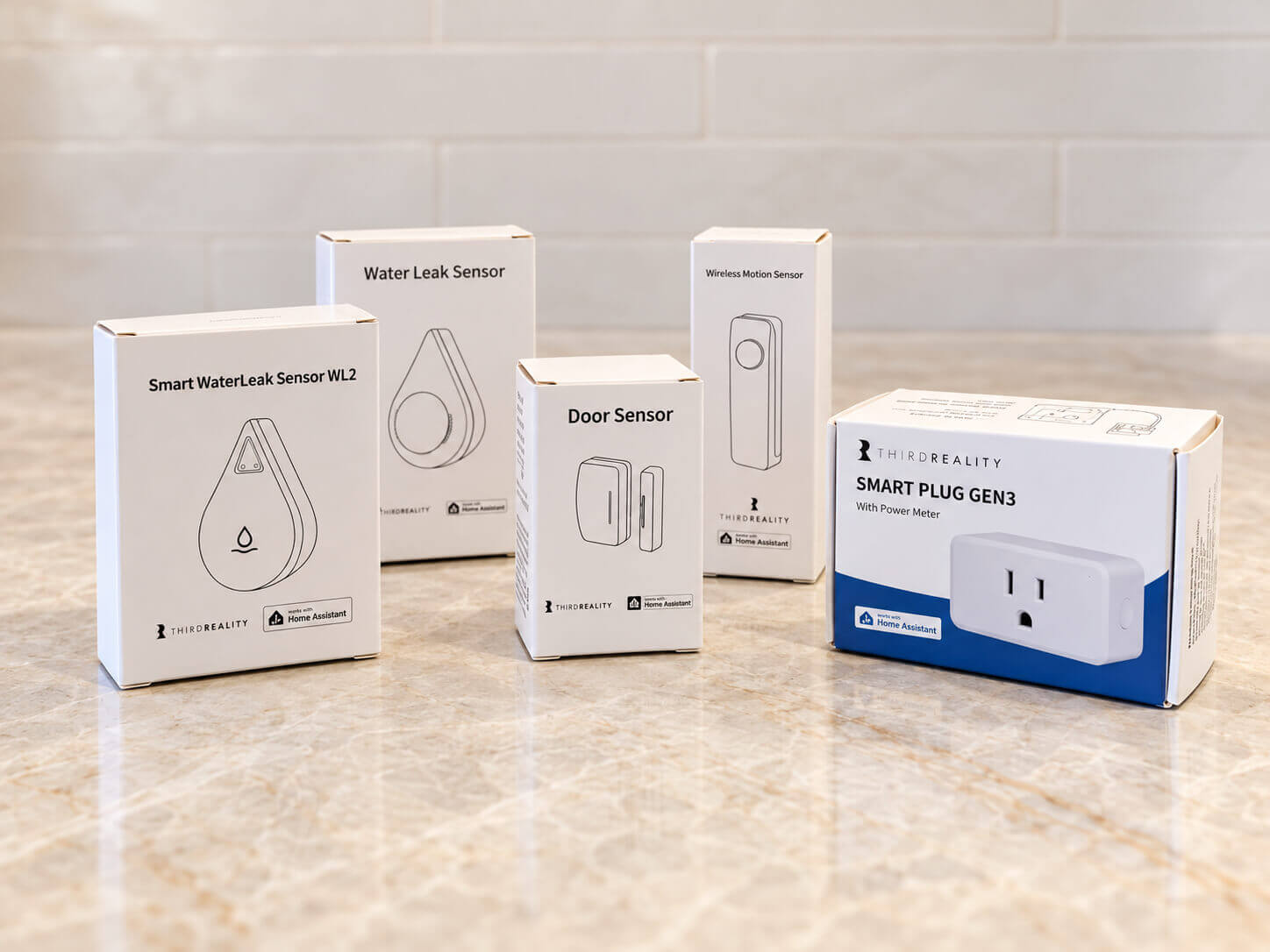
For water leak sensors specifically, we currently prefer the ThirdReality WL2 based on its excellent performance, silent operation, and ease of maintenance.
We recommend checking the exact generation, connectivity standard, and smart-home platform compatibility before purchasing any additional Eve device.
What Makes Matter over Thread Attractive for Rental Properties?
One of the biggest reasons we like Eve is the company’s adoption of Matter and Thread in its newer hardware.
The two technologies solve different problems.
Matter is an interoperability standard that allows compatible smart-home devices to communicate with supported controllers from different ecosystems.
Thread is a low-power wireless mesh network designed for smart-home devices.
A Matter-over-Thread device uses Matter for device communication and Thread as the underlying wireless network.
For short-term rentals, this combination offers several practical advantages.
Fewer Devices Connected Directly to Wi-Fi
We generally avoid adding unnecessary smart plugs, switches, and sensors directly to a rental property’s Wi-Fi network.
Guests regularly connect phones, tablets, streaming devices, and computers. We prefer to keep the smart-home device network separate from ordinary guest Wi-Fi clients wherever possible.
Eve’s Thread devices communicate through a Thread mesh rather than connecting individually as Wi-Fi clients.
This doesn’t eliminate all networking concerns, but it gives us a cleaner approach to managing connected devices.
Read our guide to why smart-home devices shouldn’t compete with guest Wi-Fi.
Powered Devices Strengthen the Thread Network
Devices such as Eve Energy, Eve Energy Outlet, and Eve Light Switch remain connected to electrical power.
As compatible Thread routers, they can relay communications for other Thread devices and extend network coverage.
That means installing a smart plug or switch can also benefit battery-powered Thread sensors elsewhere in the property.
However, mesh networks still require thoughtful installation. Coverage, interference, border-router placement, and controller compatibility all affect reliability.
No Proprietary Eve Hub Required
The current Matter-enabled Eve devices we’ve tested don’t require a dedicated Eve hub.
They do require compatible Matter controller and Thread Border Router functionality, which may be provided by the same hub or by different devices.
We use SmartThings for our testing, but it’s important to verify the capabilities of the exact controller before purchasing.
Matter compatibility alone doesn’t guarantee that a controller can connect to Thread devices or expose every advanced device feature.
For more information, see Eve’s official Thread documentation and our comparison of smart-home protocols for short-term rentals.
Privacy and Local Control: Another Reason We Like Eve
Eve takes a privacy-focused approach to its smart-home products.
Unlike many Wi-Fi ecosystems, its Matter-enabled hardware doesn’t require creating an Eve cloud account for normal operation through a compatible Matter controller.
This reduces dependence on a separate manufacturer service and avoids adding yet another account to maintain across rental properties.
We particularly appreciate that approach after dealing with products that require their own apps and cloud integrations before they can be added to SmartThings.
There is one important distinction, however.
Local device communication does not mean every part of the larger automation system works without the Internet.
Remote access, notifications, booking-calendar synchronization, and third-party services may still depend on Internet connectivity and the infrastructure used by the smart-home platform.
Eve’s local-first design reduces one category of dependency. It doesn’t eliminate every potential point of failure.
For further details, see Eve’s official explanation of its privacy and local-control approach.
The Downsides of Eve Systems
We like Eve’s products, but there are some genuine limitations.
Premium Pricing
Eve is generally more expensive than comparable products from IKEA, ThirdReality, and other value-oriented manufacturers.
For a single smart plug, the difference may not matter much.
For a property requiring many plugs, switches, outlets, and sensors, it can add up quickly.
And based on our testing, spending more doesn’t always produce a meaningful improvement.
Premium Hardware Doesn’t Always Mean Better Guest Usability
The Eve Light Switch is a perfect example.
Its construction and connectivity are excellent, but we would prefer a conventional tactile paddle for most short-term rental installations.
A smart-home product needs to work well for guests, not just for the person configuring it.
Installation and Infrastructure Requirements
Eve Energy Outlet and Eve Light Switch are hardwired devices that require compatible wiring and adequate electrical-box space.
Their Thread connectivity also requires suitable controller and border-router infrastructure.
These aren’t unusual requirements, but they matter when selecting equipment for an existing rental property.
Not Every Device Needs to Be Premium
This may be our most important criticism of an all-Eve approach.
We really like the Eve Energy Smart Plug. But for a contact sensor installed on a utility closet or a leak sensor hidden beneath a sink, we don’t necessarily see the value in paying a significant premium.
In those situations, ThirdReality or IKEA may offer a better balance of price and performance.
When We’d Choose Eve
Eve is our preferred option when hardware refinement, reliability, and permanent installation matter more than minimizing purchase cost.
Its smart plug and hardwired outlet are particularly compelling.
We’d also consider Eve for new Matter-over-Thread installations where adding powered Thread devices will help improve network coverage.
Where Eve Fits Into a Short-Term Rental Automation System
Eve is an excellent hardware manufacturer, but it isn’t a complete short-term rental automation platform.
It doesn’t replace the need for a supported smart lock, thermostat, water shutoff valve, or reservation-aware automation system.
Our preferred approach is to combine devices according to their strengths.
We generally use supported Z-Wave smart locks for automated guest access, compatible smart thermostats for energy management, appropriate water valves and leak sensors for property protection, and smart switches or outlets for lighting and other controllable equipment.
Eve fits particularly well into that last category.
A compatible Matter-over-Thread Eve device can be managed through SmartThings alongside other supported equipment.
Then Rental Home Automator can coordinate supported device operations around reservation events, including check-in, checkout, and vacancy periods.
It’s important to distinguish these capabilities: not every SmartThings device attribute or sensor event is necessarily an automation feature supported directly by Rental Home Automator.
For a deeper explanation, see our calendar-based rental automation guide and Best Smart Home Devices for Airbnb.
Frequently Asked Questions About Eve Systems
Is Eve Systems a good smart-home brand?
Yes. Based on our testing of Eve Energy, Eve Energy Outlet, and Eve Light Switch, Eve makes some of the highest-quality smart-home hardware we’ve used.
We particularly recommend its smart plug and outlet for short-term rentals.
Is Eve worth the higher price?
Often, yes—especially for smart plugs and permanently installed outlets where build quality and reliability are priorities.
However, IKEA and ThirdReality offer excellent alternatives for less demanding applications.
We don’t think every device in a rental property needs to be premium hardware.
Does Eve work with SmartThings?
Yes. We’ve successfully tested the Matter-over-Thread versions of Eve Energy, Eve Energy Outlet, and Eve Light Switch with SmartThings.
Compatibility depends on having the appropriate Matter controller and Thread Border Router infrastructure, and advanced features may vary by platform.
Does Eve require its own hub or cloud account?
The Matter-enabled Eve devices we’ve tested don’t require a dedicated Eve hub or Eve cloud account.
They still need suitable Matter and Thread infrastructure, and remote operation through your chosen platform may depend on its own services.
What is the best Eve product for an Airbnb?
For us, it’s the Eve Energy Smart Plug.
It’s the most impressive Eve device we’ve tested, with outstanding reliability, quick responses, useful energy monitoring, and excellent construction quality.
The Eve Energy Outlet is our preferred alternative when permanent installation is more important than the flexibility of a removable plug.
Is Eve better than ThirdReality or IKEA?
Not universally.
We prefer Eve Energy for smart plugs and Eve Energy Outlet for hardwired receptacles. We prefer ThirdReality’s WL2 for leak detection, while IKEA makes several excellent lower-cost Matter-over-Thread devices.
The right choice depends on the device category, available infrastructure, and budget.
Final Verdict: Eve Is Our Premium Smart-Home Choice
Eve Systems continues to impress us.
After extensive testing, the Eve Energy Smart Plug remains our favorite smart plug, the Eve Energy Outlet is one of our top choices for permanent power control, and the Eve Light Switch offers excellent connectivity and build quality despite a less-than-ideal guest interface.
The company’s local-first approach and support for Matter over Thread are particularly attractive for short-term rentals, where simplifying infrastructure and avoiding unnecessary cloud dependencies can make a real operational difference.
But we’re not recommending Eve blindly.
Some ThirdReality sensors are our favorites in their categories, and IKEA’s affordable Matter devices are making premium pricing harder to justify for every application.
Our recommendation: Choose Eve when its quality and reliability provide meaningful value, and use equally capable lower-cost alternatives where they make more sense.
That’s how we’d build a dependable, cost-effective smart-home system for a rental property.
Turn Reliable Devices Into Rental Automation
The right hardware is only part of an automated short-term rental. Rental Home Automator connects supported smart-home devices with your booking calendar to help manage guest access, heating and cooling, water control, lighting, and other supported operations around reservations.