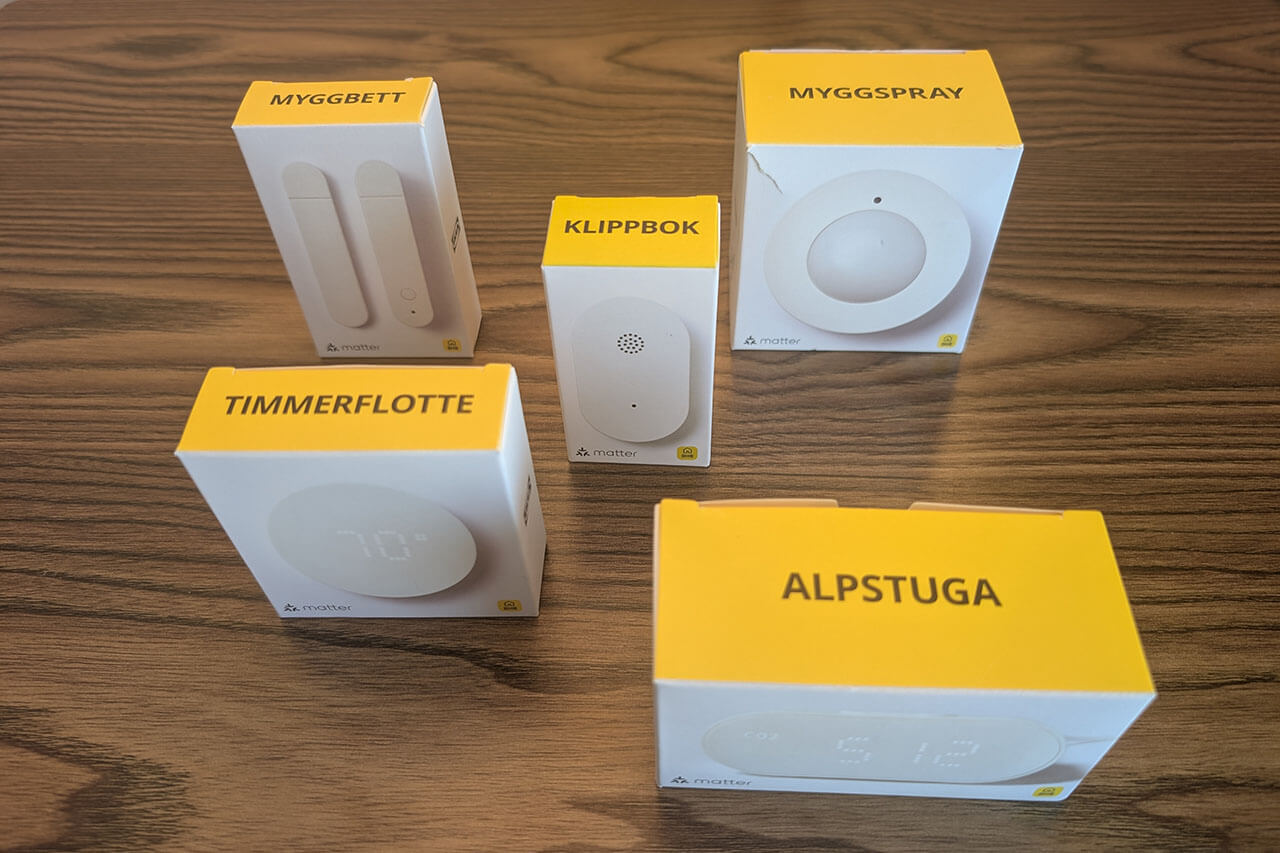
IKEA’s new Matter-over-Thread smart-home devices are among the best budget options we’ve tested for short-term rental properties. They offer remarkably affordable sensors and smart plugs, work with compatible smart-home platforms such as SmartThings, and don’t require a proprietary IKEA hub.
That’s a significant improvement over many inexpensive smart-home ecosystems.
At Rental Home Automator, we’ve been testing IKEA’s newer devices to determine whether they’re suitable for Airbnb and vacation rental properties. So far, products such as the KLIPPBOK water leak sensor, MYGGBETT contact sensor, MYGGSPRAY motion sensor, and GRILLPLATS smart plug have made a strong impression.
They’re not perfect. Some have design quirks, limited features, or software behavior that needs improvement. But compared with much more expensive alternatives, the value is difficult to ignore.
Here’s what we’ve learned, which IKEA smart-home devices we’d recommend, and where they fit into a reliable short-term rental automation system.
Why IKEA’s New Smart-Home Ecosystem Is Different
Inexpensive smart-home devices usually come with compromises. Many require proprietary apps, vendor-specific hubs, or cloud services that complicate integration with other equipment.
That’s particularly frustrating for short-term rental owners.
A rental property might use a Z-Wave smart lock, an ecobee thermostat, Zigbee lighting controls, and multiple water leak sensors. Adding another separate ecosystem creates more systems to manage, more potential failure points, and another app to troubleshoot remotely.
We strongly prefer building rental automation around devices that work together through an established smart-home platform.
IKEA’s newer Matter-over-Thread products offer exactly that kind of flexibility.
Rather than depending on an IKEA-specific connection, these devices use two open smart-home technologies:
- Matter provides a common language for compatible smart-home devices and controllers.
- Thread provides a low-power wireless mesh network designed for connected devices such as sensors and smart plugs.
This distinction is important. Matter describes how compatible devices communicate; Thread is one of the networks that can carry those communications.
With a suitable Matter controller and Thread Border Router, IKEA devices can connect to platforms such as Samsung SmartThings without requiring IKEA’s DIRIGERA hub.
The result is an affordable ecosystem that can operate alongside devices from other manufacturers.
For more background, see our guide to the best smart-home automation protocols for short-term rentals.
Our Hands-On Experience With IKEA Matter Devices
Our opinion of IKEA’s new lineup comes from actually installing and testing its products, not simply comparing specifications.
We’ve tested multiple IKEA Matter-over-Thread devices with SmartThings, focusing on the things that matter most for rental properties: reliable communication, installation, battery replacement, response times, and practical automation capabilities.
Our experience has been encouraging.
The MYGGBETT contact sensor has been fast and dependable. The MYGGSPRAY handles motion detection well, although its illuminance reporting has been less consistent. The KLIPPBOK provides inexpensive water leak detection, while the GRILLPLATS smart plug offers capabilities we normally expect from much more expensive hardware.
We have also found issues worth discussing, including bulky housings, inconvenient Matter pairing-code placement, and differences in which device capabilities SmartThings exposes.
These are precisely the details that matter when purchasing devices for properties you may not visit for weeks or months.
Our overall impression: IKEA has made affordable smart-home hardware that deserves serious consideration, but individual devices still need to be evaluated for their intended use.
Build Quality: Better Than the Price Suggests
One of our biggest surprises has been IKEA’s hardware quality.
At these prices, we expected more compromises in the housings, mounting systems, and battery compartments. Instead, many of the products feel thoughtfully designed and reasonably well constructed.
The MYGGBETT contact sensor is especially impressive. Its clean design makes it easy to install discreetly on doors or windows without making a rental property look like a technology showroom.
The MYGGSPRAY motion sensor is less elegant. It is noticeably larger than some competing devices, although its flexible mounting system is useful.
The GRILLPLATS smart plug also illustrates IKEA’s approach: basic, functional hardware without the premium materials or finish of more expensive alternatives.
For rental owners, this balance often makes sense.
Guests don’t care whether a water leak sensor has an expensive enclosure. They care that the equipment works without disrupting their stay.
Standard Batteries Make Maintenance Easier
Another feature we appreciate is IKEA’s use of standard AAA batteries in its battery-powered sensors.
Specialty batteries become inconvenient when maintaining multiple properties. A replacement sensor battery shouldn’t require ordering an unusual coin cell or carrying several different battery types.
Standard AAA batteries are inexpensive, widely available, and easy for a cleaner or maintenance technician to replace.
This may seem like a small detail, but predictable maintenance becomes increasingly important when managing several rental properties.
The IKEA Matter-over-Thread Lineup for Short-Term Rentals
IKEA’s newer Matter-over-Thread lineup has become surprisingly relevant for short-term rental owners. The products are inexpensive, avoid adding more devices to the guest Wi-Fi network, and work with major Matter-compatible smart home platforms without requiring an IKEA-specific hub.
We’ve now tested all of these devices ourselves. Some are more useful for rentals than others, but the combination of low pricing, Thread connectivity, and simple hardware makes IKEA an increasingly compelling option for outfitting an entire property.
KLIPPBOK — Water Leak Sensor
The KLIPPBOK is one of the most directly useful devices in IKEA’s lineup for short-term rental owners. Water damage is one of the most expensive property problems a host can face, and leaks are particularly dangerous during vacancy periods when no one is there to notice them.
We recommend placing leak sensors under sinks, near water heaters, behind washing machines, beside dishwashers, and anywhere else a small leak could go unnoticed.
KLIPPBOK uses Matter over Thread, runs on standard AAA batteries, and has remained reliable in our testing. Its biggest drawback for an STR is the built-in audible alarm, which can alert or confuse a guest when we would often prefer the property manager to receive the alert quietly.
Read our guide to leak sensors for short-term rentals or see our full IKEA KLIPPBOK review for our hands-on testing and recommendations.

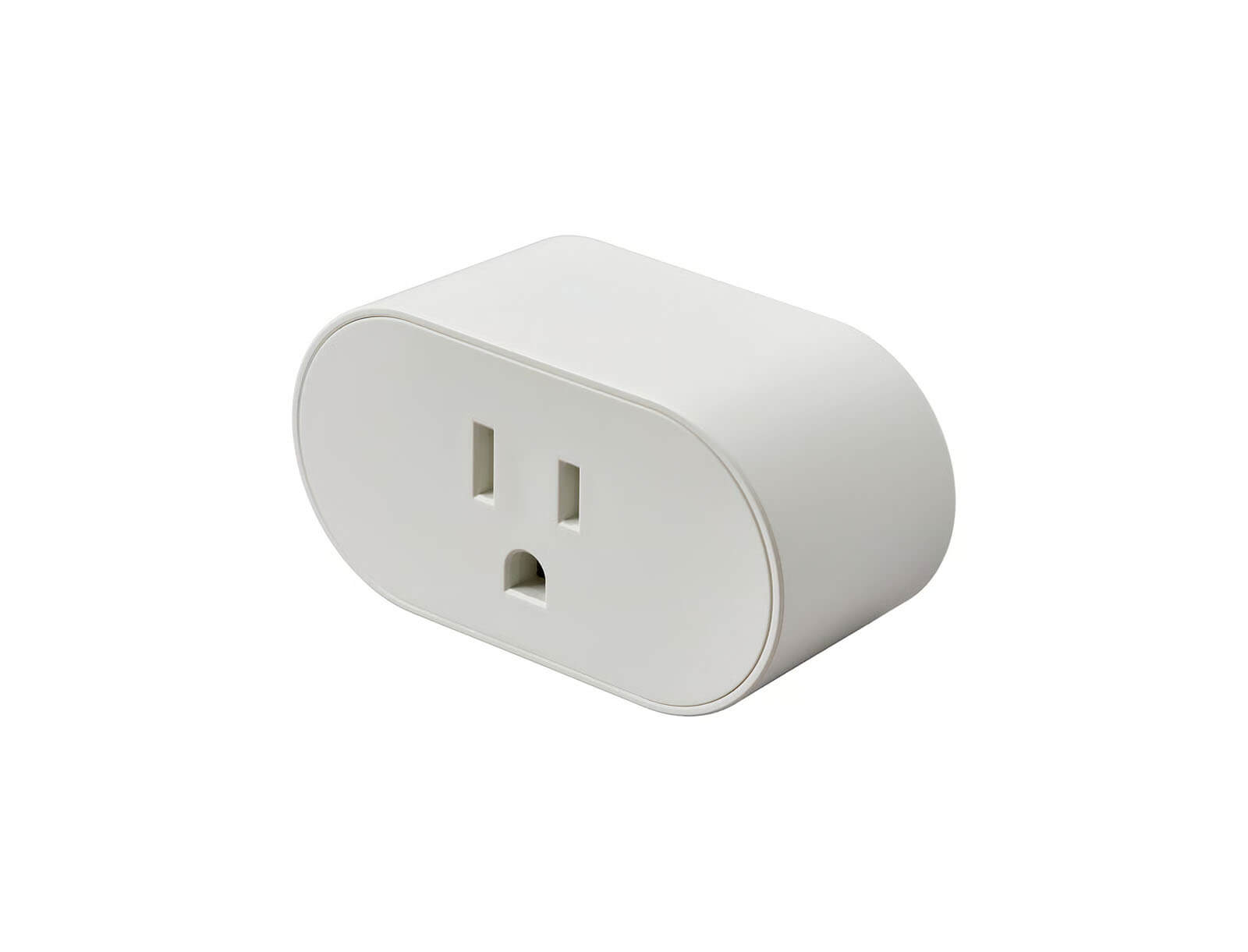
GRILLPLATS — Matter-over-Thread Smart Plug
The GRILLPLATS is not a sensor, but it may be one of the most useful products in IKEA’s new smart-home lineup.
For only a few dollars, you get a Matter-over-Thread smart plug with energy monitoring, fast response times, and broad smart-home compatibility. Because the plug is permanently powered, it can also act as a Thread mesh device, helping improve coverage for battery-powered Thread sensors elsewhere in the property.
At a short-term rental, smart plugs can be useful for lamps, decorative lighting, fans, or equipment that you want to control based on occupancy or reservation status. They can also provide a simple way to remotely power-cycle certain electronics when troubleshooting a property from hundreds of miles away.
The GRILLPLATS has worked very well with SmartThings in our testing, although it has a few quirks. Most notably, IKEA placed the Matter QR code on the back of the plug, where it becomes inaccessible once the device is plugged into the wall. We also found its power-restoration configuration less polished than premium alternatives such as the Eve Energy.
Despite those complaints, the value is extremely difficult to ignore. Read our full IKEA GRILLPLATS smart plug review for our testing, SmartThings experience, and STR recommendation.
MYGGSPRAY — Motion Sensor
The MYGGSPRAY is IKEA’s Matter-over-Thread motion sensor. For short-term rentals, we see motion sensors primarily as automation inputs rather than security devices.
They work particularly well for automatically turning on hallway, stairway, or entry lighting and can provide another signal that a property has transitioned from vacant to occupied. They can also support energy-saving automations without asking guests to interact with smart-home controls.
In our testing, the MYGGSPRAY has been responsive and reliable for motion detection. We especially like its use of standard AAA batteries and Matter-over-Thread connectivity. The housing is bulkier than we would prefer, and its illuminance readings have not been reliable enough for us to recommend using them for critical automations.
Read our full IKEA MYGGSPRAY motion sensor review for our hands-on results.

MYGGBETT — Door and Window Sensor
The MYGGBETT handles door and window open/close detection and is one of our favorite devices in IKEA’s new lineup.
At a short-term rental, contact sensors can monitor exterior doors and windows, owner closets, utility rooms, and other areas where knowing whether something has been opened is valuable. They can also become useful automation inputs—for example, detecting that the front door has opened around check-in or identifying a window left open while the HVAC system is running.
The MYGGBETT uses Matter over Thread, runs on a standard AAA battery, and has been fast and reliable in our testing. Its inexpensive price also makes it practical to deploy several throughout a property rather than limiting monitoring to one or two locations.
Read our full IKEA MYGGBETT door and window sensor review for more details.

TIMMERFLOTTE — Temperature and Humidity Sensor
The TIMMERFLOTTE monitors temperature and humidity, two measurements that are especially useful when a rental property is vacant.
Temperature monitoring can provide an early warning of HVAC failures or dangerously low indoor temperatures before frozen pipes become a much larger problem. Humidity monitoring can help identify conditions that encourage condensation or mold, particularly in humid climates or properties that may sit unoccupied for extended periods.
We generally consider temperature monitoring more operationally important for a short-term rental than humidity alone, but having both measurements available from an inexpensive Thread sensor makes the TIMMERFLOTTE an interesting addition to a broader property-monitoring system.
ALPSTUGA — Air Quality Sensor
The ALPSTUGA monitors indoor air quality. For most short-term rental properties, we consider it a lower priority than leak, temperature, door/window, and motion sensors.
That doesn’t make air-quality monitoring useless. It can provide additional visibility into changing indoor conditions, particularly at remotely managed properties. But if we were outfitting a rental from scratch, we would spend the budget on leak detection, temperature monitoring, door/window sensors, and other property-protection devices first.
The ALPSTUGA makes the most sense once those higher-priority monitoring systems are already in place.
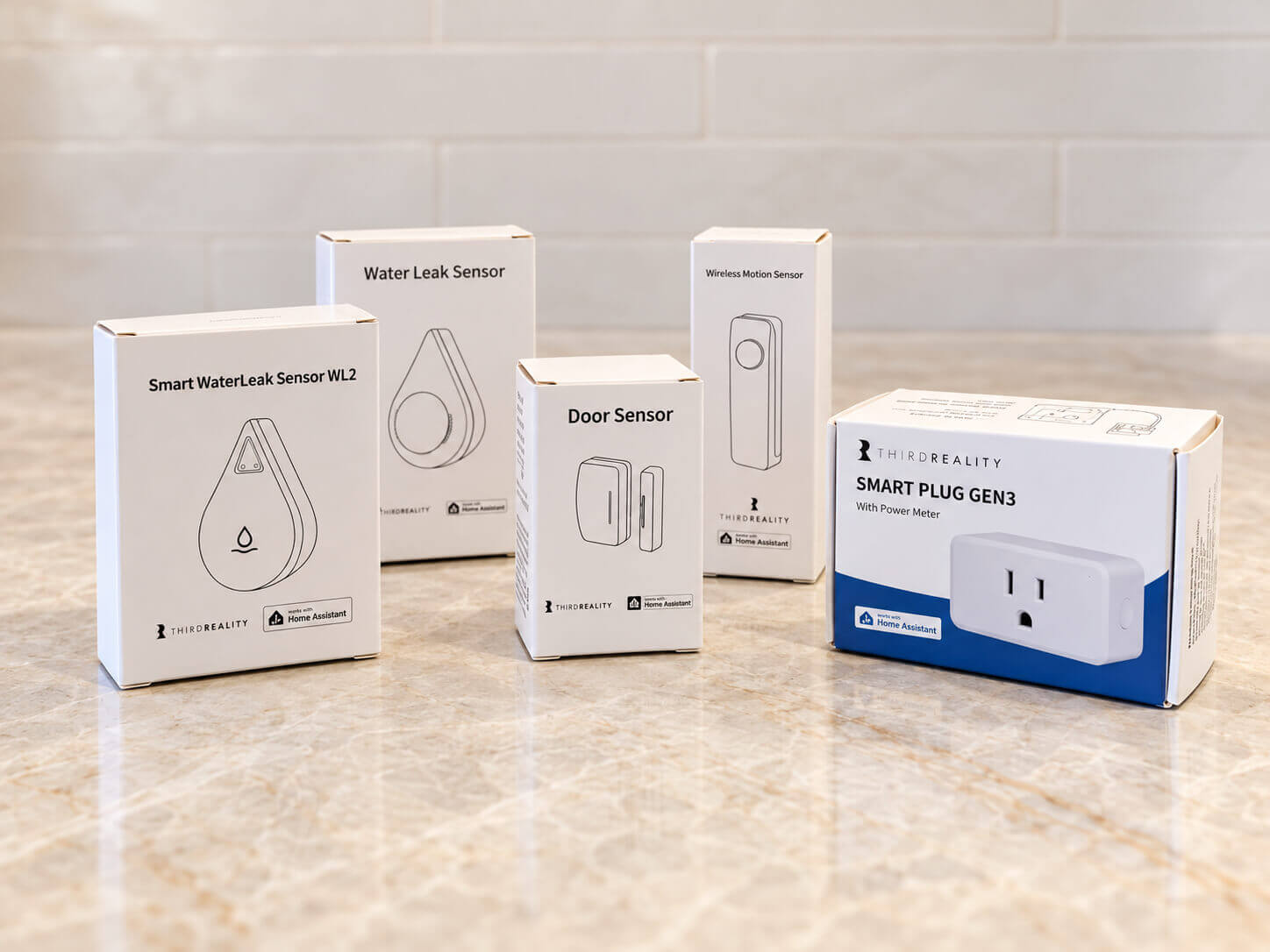
IKEA vs. Eve vs. ThirdReality: Which Budget Sensor Is Right for Your STR?
IKEA isn’t the only affordable sensor option for STR hosts. Here’s how the three main budget-friendly alternatives compare.
| Category | IKEA | Eve Systems | ThirdReality |
|---|---|---|---|
| Positioning | Budget-focused | Premium | Affordable and practical |
| Connectivity | Matter over Thread on devices reviewed | Matter/Thread on many newer devices | Primarily Zigbee in devices reviewed |
| Proprietary hub required | No, with compatible Matter/Thread infrastructure | No, with compatible infrastructure | No, with compatible Zigbee hub |
| Price | Excellent | Higher | Affordable |
| Build quality | Good for the price | Generally more refined | Functional |
| Best fit | Broad low-cost deployment | Premium installations | Existing Zigbee networks |
All three avoid the proprietary cloud dependency that makes ecosystems like Aqara a poor fit for STR use. Eve Systems is the premium option with superior build quality and a longer track record. IKEA is the right choice when you want to deploy sensors broadly across a property or portfolio without spending Eve money on every unit. ThirdReality offers a strong Zigbee-based alternative for hosts already running a Zigbee network on SmartThings.
When We’d Choose IKEA
IKEA is our preferred value-oriented option when deploying several contact sensors, leak sensors, or smart plugs across a property.
The savings become substantial when you expand from one rental to a portfolio.
For example, outfitting several kitchens, bathrooms, utility rooms, and exterior doors requires considerably more hardware than a typical homeowner setup.
IKEA makes broader coverage financially practical.
Why Thread Matters for Short-Term Rentals
One of the best reasons to consider IKEA’s new devices is their use of Thread rather than ordinary Wi-Fi connections.
Short-term rental networks face conditions that typical residential networks don’t.
Guests connect phones, laptops, streaming devices, tablets, and gaming systems. Passwords may change. Equipment occasionally gets restarted or replaced.
We prefer not to make every sensor and switch another device directly connected to that Wi-Fi network.
Thread Uses a Mesh Network
Thread is designed for low-power smart-home devices.
Compatible, mains-powered Thread devices can relay communications through the mesh, allowing battery-powered sensors to connect without each needing a direct connection to a central radio.
Devices such as GRILLPLATS can therefore serve two purposes: controlling an electrical load and contributing to Thread network coverage.
That is useful in larger properties where individual sensors may be separated by several rooms or floors.
However, Thread isn’t automatically reliable simply because it uses a mesh.
Network placement, signal quality, router compatibility, firmware, and the number and location of powered routing devices still matter.
You Still Need a Matter Controller and Thread Border Router
Matter-over-Thread devices are not standalone Internet-connected devices.
You need compatible infrastructure, including a Matter controller and access to a Thread Border Router.
Certain SmartThings hubs include these functions, while other controllers require separate Thread border-router hardware.
Importantly, a generic Matter-compatible hub does not necessarily support Thread on its own.
Before buying sensors for a rental, confirm that the exact hub model supports the required connectivity.
You can find more information in the official SmartThings Matter integration documentation.
Matter Does Not Guarantee Identical Features Across Platforms
Matter improves interoperability, but it doesn’t mean every device feature will appear identically in every application.
Sensor attributes, energy monitoring, device configuration settings, and firmware-management capabilities can differ depending on the platform and supported Matter features.
We’ve encountered these limitations ourselves.
For example, the GRILLPLATS offers useful energy monitoring, but some device configuration options are less intuitive through SmartThings than we’d like.
This is why we test devices with the platforms we actually use instead of assuming that a Matter logo guarantees identical functionality everywhere.
The Biggest Limitations of IKEA’s Smart-Home Lineup
Although we’re impressed by IKEA’s devices, there are several reasons we wouldn’t blindly purchase the entire ecosystem.
Availability and Replacement Planning
IKEA controls its own product distribution, and product availability can vary by location.
That becomes a concern when outfitting multiple properties or replacing a failed device.
For rental operations, consistent replacement availability can matter just as much as purchase price.
We recommend keeping a few spare sensors for critical deployments and maintaining a list of compatible alternatives.
Not Every Feature Is Equally Reliable
Our MYGGSPRAY testing illustrates an important point.
Its core motion detection has worked well, but we haven’t been equally impressed by its illuminance measurements.
For a homeowner, inconsistent light-level readings might be a minor annoyance.
For an unattended rental automation, depending on unreliable measurements could produce repeated failures or incorrect behavior.
Purchase each device for its proven capabilities, not simply everything advertised on the box.
Device Design Still Matters
The MYGGSPRAY is relatively bulky. The GRILLPLATS pairing-code placement is inconvenient. Other devices may have mounting or configuration limitations.
These aren’t necessarily reasons to avoid IKEA, but they’re reminders that low cost doesn’t eliminate the need for practical evaluation.
Local Connectivity Doesn’t Solve Every Problem
Matter-over-Thread can reduce dependence on a manufacturer’s cloud service for basic local device communication.
It does not eliminate the importance of a reliable Internet connection, correctly configured smart-home hub, functional Thread network, or remote-monitoring system.
And for remote landlords, a device that works locally but cannot notify anyone when something goes wrong provides limited protection.
How IKEA Devices Fit Into a Complete Airbnb Automation System
IKEA’s Matter devices are supporting components, not a complete short-term rental automation solution.
This distinction is important.
A smart sensor can detect a leak. A smart plug can control a lamp. A contact sensor can report that a door opened.
But none of those capabilities alone understands when a guest is checking in, when a cleaner is scheduled, or when a property will be vacant for the next three weeks.
That’s where an integrated smart-home platform and calendar-based automation become valuable.
Our Preferred Rental Automation Approach
For a typical short-term rental, we prefer combining devices based on their strengths rather than choosing everything from one manufacturer.
Smart locks: We continue to prefer properly supported Z-Wave locks for guest access and PIN-code automation.
Thermostats: A compatible smart thermostat manages heating and cooling according to reservation status.
Water protection: Dedicated shutoff valves provide control over the property’s water supply, while leak sensors provide additional monitoring.
Lighting and switches: Smart switches and plugs control arrival lighting and appropriate vacancy-related equipment.
Sensors: IKEA Matter-over-Thread devices and other compatible sensors provide additional information about leaks, doors, windows, movement, and environmental conditions.
Smart-home platform: SmartThings or another suitable platform coordinates the compatible devices and their local or platform-level automations.
Rental Home Automator: Our platform connects supported smart-home devices with booking-calendar events to automate supported operations around check-in, check-out, and vacancy periods.
For example, a reservation ending can trigger scheduled thermostat and water-valve changes through Rental Home Automator, while a connected leak sensor can independently report water detection through the smart-home platform.
These are complementary capabilities, not necessarily the same automation pathway.
For more detail, see our Ultimate Guide to Short-Term Rental Automation and our guide to calendar-based rental automation.
Frequently Asked Questions About IKEA Matter Smart-Home Devices
Do IKEA Matter devices work with SmartThings?
Yes. Compatible IKEA Matter-over-Thread devices can connect to supported SmartThings controllers with Thread connectivity. We’ve tested several devices successfully, including GRILLPLATS, MYGGBETT, MYGGSPRAY, and KLIPPBOK.
Feature availability can vary by device and software version.
Do I need an IKEA DIRIGERA hub?
No. IKEA’s Matter-over-Thread devices can connect through other compatible Matter controllers and Thread Border Routers. DIRIGERA is an option, not a requirement, for these devices.
Older IKEA Zigbee products have different compatibility considerations.
Is Matter over Thread better than Wi-Fi for a rental property?
For battery-powered sensors, we generally prefer Thread, Zigbee, or Z-Wave over devices that connect individually through Wi-Fi.
These protocols are designed for smart-home communication and reduce the number of devices relying directly on the rental’s Wi-Fi network.
However, actual reliability still depends on the equipment and installation.
Which IKEA devices should Airbnb hosts buy first?
We would prioritize KLIPPBOK water leak sensors and MYGGBETT door/window contact sensors for property monitoring. GRILLPLATS smart plugs are also an excellent value where controllable outlets make operational sense.
MYGGSPRAY is worth considering for appropriate lighting and motion automations.
Can IKEA leak sensors automatically shut off the water?
Potentially, but only when combined with a compatible water shutoff device and an appropriately configured automation system.
The leak sensor itself detects water; it does not close a plumbing valve.
We recommend testing any automatic shutoff workflow carefully, including its behavior during device or network failures.
Can IKEA sensors connect directly to Rental Home Automator?
IKEA Matter sensors should be considered devices connected through a compatible smart-home platform, not assumed to be directly supported automation targets in Rental Home Automator.
RHA’s supported functionality depends on the integration and device capabilities. SmartThings sensor events and routines can complement RHA’s calendar-driven control of supported devices.
Are IKEA Matter devices reliable enough for short-term rentals?
Based on our testing so far, several IKEA devices are reliable enough to recommend for appropriate rental use cases.
We particularly like the MYGGBETT contact sensor, KLIPPBOK leak sensor, and GRILLPLATS smart plug.
However, we would test any deployment before relying on it for critical property protection, and we’d maintain redundant protection for high-consequence failures.
Final Verdict: IKEA Is Becoming a Serious Smart-Home Option
IKEA’s newer Matter-over-Thread devices have exceeded our expectations.
They’re inexpensive, generally well-designed, and compatible with the kind of mixed-brand smart-home systems we prefer for short-term rentals.
Not every product is perfect. Some have usability limitations, certain reported measurements need improvement, and platform compatibility still requires attention.
But for hosts who need multiple sensors and smart plugs across one or more properties, IKEA makes it possible to expand monitoring and automation without spending a fortune.
We recommend IKEA’s Matter-over-Thread lineup as a strong budget option for short-term rental sensors and smart plugs—not as a replacement for a complete rental automation platform.
Start with the devices that solve real operational problems: leak detection, door/window monitoring, and appropriate lighting or electrical control.
Then build those devices into a broader system designed around your booking calendar.
For our preferred mix of locks, thermostats, switches, sensors, and water valves, explore our Best Smart Home Devices for Airbnb recommendations.
Ready to automate your rental beyond basic device routines?
Explore Rental Home Automator’s features to see how calendar-based automation can coordinate supported devices around guest stays.